
So, the moment has arrived. You've been asked to be the best man, an honor that comes with one tiny, nerve-wracking task: the speech. The pressure is on to be funny, heartfelt, and original, all while holding a microphone in a room full of your friend's closest family and friends. It’s a moment that can feel daunting, but it doesn't have to be.
The secret to a great speech isn't about finding the 'perfect' joke or a profound quote; it's about finding the right structure for your unique story and relationship with the groom. Think of this guide not as a set of rigid rules, but as a collection of proven blueprints. Just as a maid of honor might focus on the bride's journey or a father of the bride on a lifetime of memories, your role is to illuminate your friendship and celebrate this new partnership.
In this comprehensive guide, we'll walk through seven distinct best man speech examples, breaking down precisely why they connect with an audience. We’ll move beyond generic templates to provide a strategic look at different speech archetypes. You’ll get practical, actionable insights you can use immediately to transform your personal anecdotes into a speech that feels authentic, polished, and unmistakably you. Whether you’re aiming for hilarious, heartfelt, or a seamless blend of both, the right framework is waiting for you here. Let’s build your unforgettable toast.
1. The Classic Story-Arc Best Man Speech
This is the quintessential speech format for a reason: it just works. The Classic Story-Arc follows a simple, three-act structure that is emotionally satisfying and easy for guests to follow. You start with the past (how you met the groom), move to a defining story (often a funny or poignant anecdote), and end with the present and future (how his partner has completed his story).
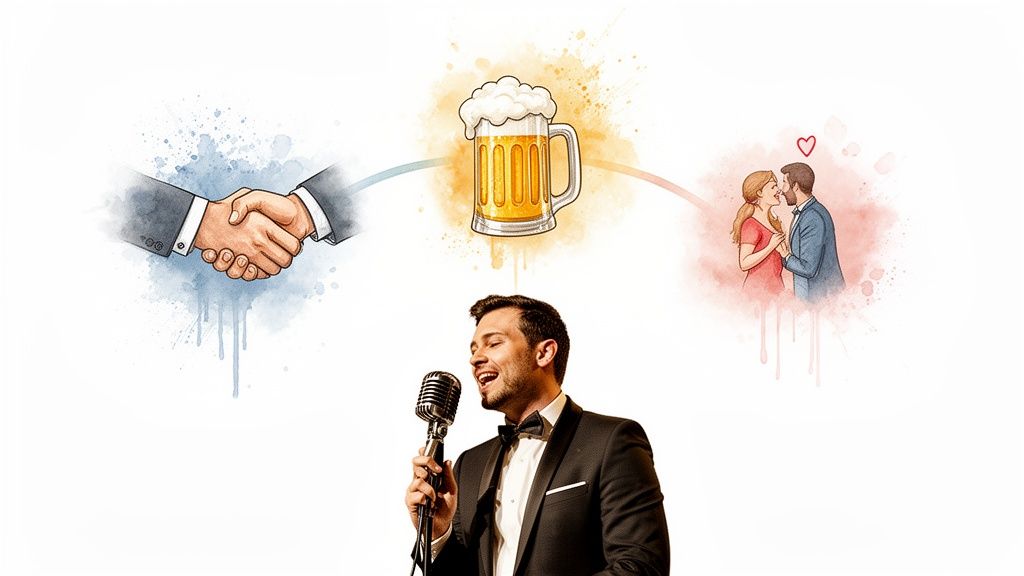
This narrative framework is one of the most popular and effective best man speech examples because it creates a clear emotional journey for your audience. You guide them from laughter during the anecdote to heartfelt sentiment when you talk about the couple, making the final toast feel earned and impactful.
Why This Structure Works
- Emotional Progression: It masterfully builds from a lighthearted introduction to a deeper, more meaningful conclusion. This arc keeps your audience engaged.
- Character Development: You present a "before" and "after" version of the groom, showcasing his growth and highlighting his partner's positive influence. This makes your praise for them feel genuine and specific.
- Relatability: Everyone understands the power of a good story. By framing your speech as a mini-narrative, you make your memories more memorable and your message more powerful.
How to Build Your Story-Arc Speech
Follow this simple outline to craft a compelling narrative that honors the groom and celebrates the couple.
- The Opening (Act I - The Past): Introduce yourself and your connection to the groom. You can start with "I met [Groom's Name] back in..." This immediately sets the scene and establishes your credentials as a witness to his life. Keep this part brief, around 30-45 seconds.
- The Core Anecdote (Act II - The Turning Point): Share one specific, well-chosen story that reveals the groom’s true character. This is your chance to be funny. Think of a memory that shows his loyalty, his sense of humor, or even a moment of charming foolishness from his college days. The key is that the story has a point and connects to the man he is today.
- The Resolution (Act III - The Present & Future): This is where you pivot. Transition from your story by explaining how meeting his partner changed him or completed his journey. For example, "For all his adventures, there was always something missing... and then he met [Partner's Name]." Conclude by expressing your admiration for them as a couple and raising a toast to their future.
Actionable Takeaways
- Mine for Specifics: Don't just say the groom is a great guy. Use a story to show it. If you're struggling to find the right memory, tools like Wedding AI can help you brainstorm by asking targeted questions about your friendship.
- Test Your Pacing: A story-arc speech should ideally land between 3 to 5 minutes. Rehearse it out loud to ensure the anecdote doesn't drag or feel rushed. Your goal is a smooth, natural delivery.
- Refine the Clichés: Instead of saying "he's a changed man," try a more personal line like, "I've never seen him as happy or as sure of himself as he is when he's with you." This specificity makes your words resonate more deeply.
2. The Roast-and-Toast Hybrid Speech
This modern template is perfect if you want to deliver a funny speech that still feels deeply heartfelt. The Roast-and-Toast combines good-natured teasing of the groom with sincere, loving compliments about the couple. You strike a perfect balance between laughter and sincerity, acknowledging the audience's expectation for humor while pivoting to genuine emotion.
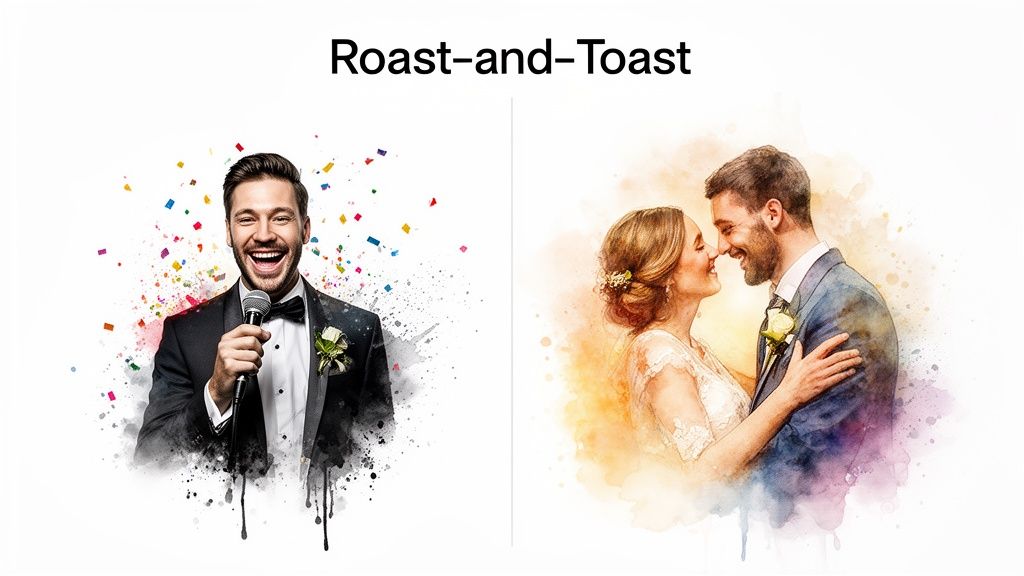
The "roast then toast" cadence keeps the energy high and prevents your speech from becoming one-note. You get to share those hilarious inside jokes and quirks that define your friendship, then smoothly transition into a meaningful tribute that honors the gravity of the occasion. This structure is a crowd-pleaser because it delivers both comedy and heart.
Why This Structure Works
- Audience Engagement: The initial roast grabs everyone's attention with laughter, making them more receptive to the sincere toast that follows.
- Emotional Contrast: The shift from humor to heart is powerful. The sincerity feels more impactful and genuine when it's placed right after lighthearted teasing.
- Shows Deep Friendship: A well-executed roast demonstrates a close, comfortable bond. You can only gently tease someone you know and love well, making the subsequent praise feel more authentic.
How to Build Your Roast-and-Toast Speech
Use this outline to walk the fine line between hilarious and heartfelt without missing a beat.
- The Setup (Introduction): Introduce yourself and your relationship to the groom. You can set the stage by saying something like, "I've known [Groom's Name] for 15 years, so I've seen it all. And believe me, I have some stories." This signals to the audience that some fun is coming.
- The Roast (Good-Natured Teasing): Share one or two lighthearted, funny anecdotes about the groom. Focus on endearing quirks or harmless past blunders. The key is to mock the behavior, not the person. Your goal is collective laughter, not individual embarrassment. Keep this section to about 60-90 seconds.
- The Pivot (The Turn): This is the most crucial part. Use a clear transition phrase to signal the shift in tone. A simple, "But in all seriousness..." or "But then, something amazing happened..." works perfectly. Take a brief pause here to let the laughter settle before you continue.
- The Toast (Sincere Praise): Turn your attention to the couple. Speak about the positive changes you've seen in your friend since he met his partner. Compliment them as a unit and express your genuine happiness for their future. This is where you deliver the emotional payoff before raising your glass.
Actionable Takeaways
- Find the Funny, Not the Mean: Your roast should never be mean-spirited. Focus on shared memories that are funny to a general audience. If you're unsure if a story crosses a line, it probably does.
- Practice the Tonal Shift: The transition from roast to toast is everything. Rehearse saying your pivot line out loud to ensure the change in your voice and pace feels natural and deliberate, not abrupt.
- Make the Toast Specific: When you pivot to the toast, praise the couple with specific examples. Instead of "They're so great together," try "I'll never forget how [Partner's Name]'s face lit up when she saw him..." This makes your tribute far more memorable.
3. The Personal Growth / Transformation Speech
This approach focuses on the beautiful and often profound way the groom has changed for the better since meeting his partner. Instead of just a single story, your speech can highlight an evolution, framing their relationship as a catalyst for positive growth. It’s a modern and deeply genuine take that celebrates the enriching power of a great partnership.
This framework is one of the most resonant best man speech examples because it honors both individuals. You celebrate the groom for the man he was and the even better man he’s become, while giving specific, heartfelt credit to his partner for her incredible influence on his life. It feels authentic and offers a meaningful message about what a strong marriage looks like.
Why This Structure Works
- Deeply Personal: It moves beyond generic praise and focuses on specific, observable changes, making your tribute feel unique and well-considered.
- Honors the Partner: This structure is a powerful way to compliment the groom's new spouse directly. You're not just welcoming her to the family; you're celebrating her specific, positive impact.
- Modern and Realistic: It portrays marriage as a journey of mutual improvement and growth, a message that resonates strongly with contemporary audiences. You avoid tired clichés about "finding a soulmate" and instead focus on the real work of building a life together.
How to Build Your Transformation Speech
Follow this outline to craft a speech that is both touching and powerful, celebrating the groom’s evolution.
- Establish the "Before": After introducing yourself, describe the groom as you knew him before he met his partner. Be affectionate and lighthearted. For example, "I've known [Groom's Name] since his 'instant noodles for every meal' phase," or, "He was a workaholic who thought a 'vacation' was leaving the office at 6 p.m."
- Introduce the Catalyst for Change: Describe the moment you realized things were different. This isn’t just about him meeting his partner, but about seeing the results of their relationship. For example, "Then [Partner's Name] came along, and suddenly I was getting invitations for home-cooked dinners."
- Showcase the "After": Detail the positive changes you’ve witnessed. Focus on behaviors, not just feelings. Did he become more patient, more adventurous, or more emotionally open? Conclude by connecting this growth to their future, raising a toast to their continued journey of becoming even better, together.
Actionable Takeaways
- Focus on Observable Shifts: Instead of saying, "He's happier now," provide evidence. Say, "I saw a new kind of calm in him," or "He started making time for the things that truly matter, not just the things that were urgent."
- Give the Groom Agency: Frame the transformation as a partnership. You should avoid giving all the credit to the bride. Use phrases like, "With [Partner's Name]'s support, he found the confidence to..." This acknowledges his effort in the growth process.
- Uncover Specific Examples: Use specific memories to illustrate the change. If you're drawing a blank, tools like Wedding AI can prompt you with questions like "How has the groom changed?" to help you surface those perfect, concrete examples that make a speech unforgettable.
4. The Humorous Advice / Wisdom Speech
If you're a natural entertainer who's more comfortable with a series of quick jokes than a long story, this is your ideal format. The Humorous Advice speech frames your toast as a collection of "wisdom" for the happy couple. The hook is that your advice is actually a clever disguise for funny observations and stories about the groom.
This structure is one of the most effective best man speech examples for speakers who excel at comedic timing. Instead of relying on a single narrative, you get to land multiple punchlines, giving your speech a high-energy, memorable rhythm. The "advice" framework provides a clear purpose that the audience can easily follow.
Why This Structure Works
- High Laugh Potential: It's built for comedy. You can structure it as "three things I've learned from the groom about marriage," with each point being a setup for a funny anecdote.
- Engaging Format: The list format (e.g., "Rule #1," "Rule #2") keeps the audience hooked and anticipating the next joke. It’s predictable in a good way, creating a satisfying pace.
- Conceals Nerves: For speakers who are nervous about storytelling, delivering a series of one-liners or short observations can feel more manageable and less pressure-filled than a single, long narrative.
How to Build Your Humorous Advice Speech
Use this outline to structure a speech that is both hilarious and heartfelt, delivering wisdom with a wink.
- The Setup (The Premise): After introducing yourself, state your intention clearly. You can say something like, "I’ve known [Groom's Name] for 15 years, so I feel uniquely qualified to offer a few pieces of advice for a long and happy marriage." This immediately tells the audience to expect a comedic take.
- The "Wisdom" (The Jokes): Deliver 3-4 distinct pieces of "advice." Each one should be a setup for a short, funny story or observation about the groom. For example: "Advice #1: Always let him think he’s in charge of the remote. It’s the only way he’ll feel like he won something after losing to you in Mario Kart for three years straight, [Bride’s Name]."
- The Sincere Pivot (The Heart): After your final joke, shift your tone. This is crucial. Conclude with a genuine insight, such as, "But in all seriousness, the only advice I really have is to keep doing what you’re doing. Watching [Groom's Name] with you, [Bride's Name], has taught me what real happiness looks like." Finish with a toast to the couple.
Actionable Takeaways
- Tie Advice to Anecdotes: Don't offer generic advice like "never go to bed angry." Your points must be rooted in a specific, true story about the groom. The humor comes from the personal connection.
- The Rule of Three: Stick to three pieces of advice. It’s a classic comedic structure that is easy for the audience to follow and has a natural rhythm. Four is the absolute maximum before it starts to feel long.
- Nail the Landing: The transition from funny to sincere is what makes this speech powerful. Practice the final lines to ensure the shift feels authentic, not abrupt. This sincere capstone is what makes your best man speech example stand out.
5. The Vulnerable / Honest Reflection Speech
This speech format moves away from polished performance and leans into genuine, heartfelt authenticity. The Vulnerable/Honest Reflection is about sharing a real emotion, a moment of personal growth tied to your friendship with the groom, or even a past uncertainty that makes the couple's certainty so beautiful. It’s a powerful approach for modern weddings, as it feels raw, real, and deeply connective.
This type of speech is one of the most memorable best man speech examples because it gives the audience permission to feel something profound. Instead of just telling guests the groom is a great friend, you’re showing them the impact of that friendship on your own life. This creates a powerful emotional connection that a purely comedic speech can't always achieve.
Why This Structure Works
- Creates Instant Connection: Vulnerability is a shortcut to intimacy. By sharing something honest, you invite the audience into a more personal space, making your words feel less like a performance and more like a shared moment.
- Highly Memorable: Guests hear dozens of toasts. The ones that stand out are often those that carry genuine emotional weight. A moment of sincere reflection is far more memorable than a generic joke.
- Celebrates Growth: This format is perfect for telling a story about overcoming challenges, whether it's friendship distance, personal struggles, or the journey to finding the right partner. It frames the wedding not as a fairytale ending, but as a beautiful, earned milestone.
How to Build Your Vulnerable Speech
Use this framework to share an honest reflection without becoming self-indulgent. The focus must always return to the couple.
- The Foundation: Introduce yourself and state the core truth of your friendship. You can start with something direct, like, "For anyone who knows me and [Groom's Name], you know our friendship hasn't always been easy," or, "I used to be skeptical about finding 'the one'."
- The Vulnerable Pivot: Share a brief story or feeling that illustrates this truth. For instance, you could talk about a time you and the groom drifted apart and how you reconnected, or a moment you saw him with his partner and realized what true partnership looked like. This is about your perspective on their story.
- The Celebration: Connect your reflection directly to the couple. Explain how seeing the groom with his partner reinforced your belief in love, friendship, or commitment. Conclude by celebrating their strength and expressing your sincere happiness for their future. The message is, "Your love has taught me something."
Actionable Takeaways
- Vulnerability with a Purpose: Your reflection should serve the couple's story, not your own need for catharsis. The goal is to highlight their strength, not to dwell on your own struggles. Use this as a test: does my story make the groom and his partner the heroes?
- Balance Honesty with Hope: The story can start in a place of difficulty (e.g., "We had a huge falling out once..."), but it must resolve with positivity and love. The arc should always move from a challenge to a celebration of their union.
- Practice for Poise: Being vulnerable doesn't mean being unprepared. Rehearse the emotional parts of your speech so you can deliver them with heartfelt sincerity, not as an uncontrollable sob. It's okay to get choked up; it's less effective if you can't finish your sentences.
6. The Unexpected Connection / Unlikely Friendship Speech
This speech format is a powerful way to captivate an audience by subverting their expectations. It centers on a surprising story of friendship, either between you and the groom or between the groom and his new partner. You can start by highlighting an apparent mismatch or an unlikely beginning, creating curiosity that holds the audience’s attention until the very end.
The "unlikely friendship" narrative is one of the most engaging best man speech examples because it creates natural story tension. When you explain why your friendship (or their relationship) shouldn't work on paper, guests lean in, eager to hear how you overcame the odds. This structure is especially effective in diverse settings where guests may not know each other well, as it celebrates finding connection in unexpected places.
Why This Structure Works
- Creates Instant Intrigue: Starting with a paradox like, "If you'd told me ten years ago that this quiet bookworm would be my best friend, I would have laughed," immediately grabs attention.
- Highlights Deeper Qualities: By moving past surface-level differences, you get to showcase the core values that truly connect people, like loyalty, kindness, or a shared sense of humor.
- Provides a Natural Parallel: The story of your unlikely friendship serves as a perfect metaphor for the couple. You can beautifully transition to how they, too, might seem like opposites who create a perfect balance.
How to Build Your Unlikely Friendship Speech
Use this framework to turn a surprising connection into a memorable and meaningful toast.
- The Opening (The Mismatch): Introduce yourself and immediately establish the "mismatch." Explain why you and the groom seemed incompatible at first. Were you rivals at work? Did you meet through a random online video game? State the contrast clearly in the first 30 seconds.
- The Core Story (The Bridge): Share the specific moment or series of events that bridged the gap. This is the "how" of your story. Describe the project, the trip, or the late-night conversation that revealed your shared values and turned you from acquaintances into true friends.
- The Resolution (The Parallel): Pivot from your story to the couple. You can draw a direct parallel: "And just when I thought I’d seen the most unlikely pairing in our friendship, [Groom's Name] met [Partner's Name]." Celebrate how their own unique differences complement each other, creating a stronger partnership. Conclude with a toast to their beautifully unexpected love story.
Actionable Takeaways
- Identify the Contrast: Pinpoint what makes your friendship surprising. If you're struggling, tools like Wedding AI can prompt you with questions like "How did you meet the groom?" to help you uncover the unique angle of your origin story.
- Show, Don't Just Tell: Instead of just saying you were different, give concrete examples. "He was meticulously organizing his comic books alphabetically, while I was just trying to find matching socks."
- Land a Meaningful Theme: Your conclusion should have a point beyond "opposites attract." Frame it around a bigger idea, like how the best connections are the ones you never see coming, making their discovery all the more special. This gives your toast a thoughtful, lasting impact.
7. The Montage / Multi-Story Snapshot Speech
If you have too many great memories to choose just one, the Montage Speech is your perfect fit. Instead of a single, detailed story, this structure strings together three to five short, distinct anecdotes. You can think of it as creating a highlight reel of your friendship with the groom, showcasing different facets of his personality through rapid-fire snapshots.

This format is dynamic and keeps the audience's attention by constantly shifting gears. It allows you to paint a more comprehensive picture of the groom, moving from a funny college memory to a touching moment that shows his loyalty, all before bringing it back to his relationship with his new partner. It’s an effective way to deliver a truly memorable best man speech.
Why This Structure Works
- High Energy: The quick pace and variety of stories keep the energy high and the audience engaged. There's no time for anyone to get bored.
- Comprehensive Portrait: You're not defining the groom by a single event. Instead, you're presenting a multi-faceted view that feels rich and complete, showing him as a friend, a son, and now, a husband.
- Flexibility: This structure is perfect if you have several great short stories but none that can carry a full five-minute speech on its own. It lets you use your best material without forcing a single narrative.
How to Build Your Montage Speech
Follow this outline to create a speech that feels like a cinematic tribute to your friendship.
- The Opening & Theme: Introduce yourself and establish a unifying theme for your stories. For example, you could say, "To really know [Groom's Name], you have to see him in a few different lights. So I want to share three brief moments that define him for me."
- The Snapshots (The Core): Share your chosen mini-stories one after another. Dedicate just 30-45 seconds to each. Vary the tone: one funny, one heartfelt, one that shows his character. A great sequence might be: the hilarious college mishap, the time he was an incredibly loyal friend, and the moment you knew he was serious about his partner.
- The Unifying Conclusion: After your final snapshot, tie everything together. Explain how all these different sides of him make him the perfect partner for the person he's marrying. End with a heartfelt toast to the couple, bringing all the threads of your speech to a powerful close.
Actionable Takeaways
- Find Your Theme: Don't just list random stories. A theme like "Three things I learned from [Groom's Name]" or "The moments that led him here" provides a crucial throughline that makes the speech feel cohesive.
- Practice Your Transitions: The biggest challenge of a montage speech is making it flow. Your transitions between stories are key. Practice saying them out loud so they sound natural, not like you're just reading a list.
- Keep Each Story Tight: Be ruthless with your editing. Each snapshot should have one clear point and then you move on. If you're struggling to condense your memories, a tool like Wedding AI can help you trim the excess and keep each story impactful and brief.
7 Best Man Speech Styles Compared
| Speech Style | Implementation Complexity | Resource Requirements | Expected Outcomes | Ideal Use Cases | Key Advantages |
|---|---|---|---|---|---|
| The Classic Story-Arc Best Man Speech | Low–Medium | One strong anecdote, basic rehearsal | Clear emotional progression, balanced laughs and sentiment | First-time speakers, mixed audiences | Safe, familiar structure with strong payoff |
| The Roast-and-Toast Hybrid Speech | Medium–High | Sharp jokes, audience awareness, practiced transition | High energy laughter then heartfelt impact | Close friends with established banter | Delivers expected humor while amplifying sincerity |
| The Personal Growth / Transformation Speech | Medium | Specific before/after examples, factual observation | Deep resonance, meaningful takeaway about couple | Friends who witnessed real change in groom | Feels authentic and memorable, honors growth |
| The Humorous Advice / Wisdom Speech | Medium–High | Multiple punchy lines, comedic timing, rehearsal | Frequent laughs, lighter narrative, warm close | Natural comedians, witty speakers | Flexible riff format that showcases comedic strengths |
| The Vulnerable / Honest Reflection Speech | Medium | Personal stories, emotional control, careful editing | Strong emotional connection, memorable authenticity | Modern, emotionally literate audiences; close relationships | Highly authentic, breaks conventional expectations |
| The Unexpected Connection / Unlikely Friendship Speech | Medium | A surprising hook, clear setup and payoff | Curiosity-driven engagement, memorable novelty | Diverse or multigenerational guests, nontraditional friendships | Subverts expectations, creates immediate interest |
| The Montage / Multi-Story Snapshot Speech | Medium–High | Several short anecdotes, tight transitions, pacing control | Dynamic, comprehensive portrait of the groom | Experienced speakers, high-energy settings | Shows multiple facets quickly; easy to edit/swizzle stories |
Your Story, Your Speech: Turning Examples into Authenticity
As we’ve explored, the world of best man speech examples is vast and varied. From the laugh-out-loud "Roast-and-Toast Hybrid" to the deeply moving "Vulnerable Reflection," each structure offers a powerful framework for telling a story. But a framework is just a skeleton; your memories, your voice, and your genuine affection for the groom are what bring it to life.
The most unforgettable speeches aren’t delivered by professional comedians or award-winning authors. They are delivered by people who mean what they say. The true takeaway from all these examples is that authenticity is your greatest tool. Your goal isn't to copy a speech line-for-line, but to find a structure that feels like a natural home for the stories you already want to tell.
Finding Your Authentic Framework
Think back to the examples we analyzed. Did the "Classic Story-Arc" resonate with a pivotal moment in your friendship? Does the "Humorous Advice" model fit your natural wit and the dynamic you share with the groom? Don't force a structure that feels alien to you.
- If you're a natural storyteller: The "Classic Story-Arc" or the "Montage" speech will allow you to weave together memories into a compelling narrative.
- If your humor is sharp and well-known: The "Roast-and-Toast Hybrid" can be a huge hit, provided you know where the line is and stay on the right side of it.
- If you've witnessed profound change: The "Personal Growth" speech is an incredibly powerful way to honor the groom's journey and his partner's role in it.
The best speech for you is the one that minimizes the distance between the words you write and the way you actually feel. It’s about selecting a vehicle that is sturdy enough to carry your best stories and emotions to the audience without breaking down under the weight of pretense.
Actionable Next Steps: From Example to Execution
Reading best man speech examples is the first step. Now it’s time to build your own. Here’s how to transition from inspiration to action:
- Choose Your Core Stories: Before you even pick a structure, list 3-5 essential memories or qualities about the groom. What moments define your friendship? What story best illustrates his character? What was your first impression of the couple together?
- Match Stories to a Structure: Review the speech types we covered. Which framework provides the best showcase for the stories you just listed? This is where you move from a collection of anecdotes to a cohesive speech with a beginning, middle, and end.
- Draft with Your Voice: Write the first draft as if you were just talking to a friend. Don't worry about perfection. The goal is to capture your natural cadence and phrasing. You can polish the words later, but you can't easily insert a personality that wasn’t there to begin with.
- Practice for Pacing, Not Memorization: The key to a great delivery is comfort, not robotic memorization. Read your speech aloud until you know the flow and the key transition points. This allows you to look up, make eye contact, and connect with the couple and their guests.
Ultimately, this moment is a gift. It’s a rare opportunity to publicly honor someone you care about and to celebrate a pivotal milestone in their life. The examples in this article are your map and compass, but the journey is uniquely yours. Trust your instincts, speak from the heart, and remember that your genuine presence and sincere words are more valuable than any perfectly crafted joke. You are not just giving a speech; you are contributing a permanent, beautiful memory to their wedding day.
Feeling stuck trying to connect your stories into a seamless narrative? Wedding AI can help you bridge the gap from scattered memories to a polished, authentic speech. Our platform uses your own anecdotes and details to help you structure, write, and refine a toast that sounds exactly like you, only better.


