
The best man speech follows a simple, time-tested formula: you'll need a strong opening, a personal story or two about the groom, a warm welcome to his partner, and a final toast. This framework is your best friend for hitting that perfect balance of funny and heartfelt. Most importantly, aim to keep your speech under five minutes—that’s the sweet spot for holding everyone's attention and leaving them wanting more.
Your Blueprint for an Unforgettable Speech
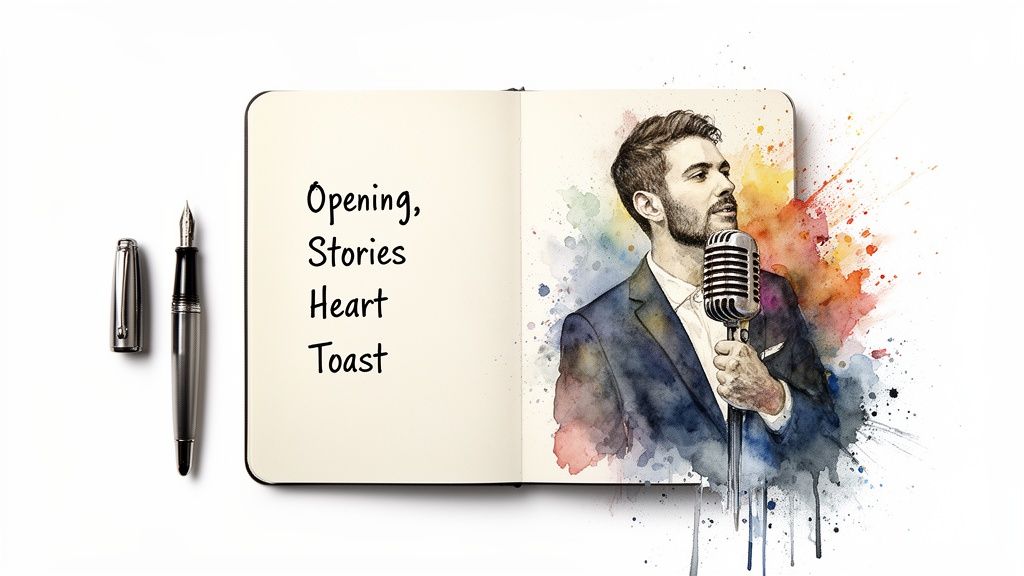
Standing up there with a microphone in your hand can feel a little intimidating, but it doesn't have to be. The secret to an incredible wedding speech isn't about becoming a stand-up comic overnight; it's about having a solid structure. Think of this as your personal blueprint for building a speech that lands every joke and tugs at all the right heartstrings.
First, we’ll nail down the foundational pieces, showing you how to string your ideas together so they flow naturally. You’ll learn how to kick things off with confidence, weave your stories together smoothly, and wrap it all up with a memorable finish that gets the whole room raising a glass.
This isn’t some rigid script you have to follow word-for-word. It’s a flexible guide you can shape to fit your unique friendship with the groom. By the time you're done here, you’ll have a clear path to crafting a speech that truly honors the happy couple and keeps the guests hooked from start to finish.
The All-Important Five-Minute Rule
Before we get into the nuts and bolts, let's talk about the golden rule of wedding speeches: timing. The sweet spot is 3 to 5 minutes. Any longer, and you risk losing the room. This isn't just a random number; it's a practical piece of advice that ensures your message makes an impact without overstaying its welcome. If you want to dig deeper into wedding speech etiquette, exploring best man speech guides can offer even more insight.
Here is a quick breakdown of how you can allocate your time for maximum impact, ensuring you stay within that recommended 3 to 5 minute timeframe.
The 5 Minute Speech Structure at a Glance
| Speech Component | Purpose | Recommended Time |
|---|---|---|
| The Opener | Grab attention, introduce yourself, and state your connection to the groom. | 30-45 seconds |
| Story about the Groom | Share a short, relevant anecdote that reveals his character (funny or sweet). | 60-90 seconds |
| Connecting to the Couple | Talk about the groom meeting his partner and how they have impacted his life. | 60 seconds |
| Address the Partner | Directly welcome them to the family and express your happiness for them. | 30 seconds |
| The Toast & Closing | Offer well-wishes and lead the guests in a toast to the newlyweds. | 30 seconds |
Remember, this is a guideline, not a stopwatch. The goal is for you to feel prepared, not robotic.
A great speech is a lot like a great friendship—it doesn’t need to be long to be meaningful. Focus on making an impact, not filling time.
Why a Good Structure Is Your Best Friend
Having a clear outline does more than just organize your thoughts—it’s a massive confidence booster. When you know exactly what’s coming next, you can stop worrying about forgetting your lines and focus on what really matters: connecting with the couple and all their guests.
This blueprint works for just about any wedding speaker, whether you’re the best man, maid of honor, or father of the bride. It's designed to help you hit all the essential marks:
- Celebrate the groom: Share stories that show everyone why he’s a great person.
- Welcome his partner: Make them feel genuinely embraced and celebrated.
- Honor their relationship: Express real joy for their future together.
- Engage the crowd: Keep the energy up and the guests entertained.
If you’re staring at a blank page and the words just aren’t coming, a tool like Wedding AI can be a great place to start. It asks you questions about your relationship with the groom, helping you pull out those perfect memories and arrange them into a speech that sounds like you.
Crafting an Opening That Hooks the Audience
Those first 30 seconds at the microphone are everything. This is your chance to grab the room's attention, establish the vibe of your speech, and show everyone you're not about to bore them. You want guests to put their forks down and lean in, genuinely curious about what's coming next.
Let's agree on one thing right now: we're officially retiring the line, "For those of you who don't know me…" It’s a classic crutch, but it’s also a wasted opportunity. You can do so much better. Starting with something that feels personal and real right out of the gate is a simple tweak that changes the entire game.
Starting with Confidence
The best openings feel effortless because they come straight from the heart. Your goal isn't to be a stuffy speaker; you're there as a friend, sharing a moment. Think of your first line as a warm handshake—it should be confident, welcoming, and set a friendly tone for everything that follows.
Instead of that tired old intro, try one of these angles:
- The Sincere Observation: Kick things off by pointing out how incredible the moment is. A simple, genuine comment about the couple or the atmosphere of the day always lands well.
- The Gentle Quip: A lighthearted jab about your relationship with the groom can get an easy smile from the crowd, just make sure it's warm and everyone's in on the joke.
- The Direct Honor: Jump right in by saying how much it means to you to be standing there. It's simple, powerful, and immediately endearing.
An authentic opening doesn’t have to be a big punchline. Often, the strongest start is simple sincerity. You can let the humor build naturally from there.
Practical Opening Lines to Make Your Own
Here are a few examples to show you what I mean. See how they immediately establish the speaker's connection without needing a clunky, formal introduction? Feel free to adapt these to your own voice.
Example 1 (Brother of the Groom):
"Good evening, everyone. Seeing my brother stand up here today, looking this happy... it's truly one of the best moments of my life. I'm so honored to be here celebrating with all of you."
Example 2 (Childhood Friend):
"Hi everyone. I’ve known Mark for over twenty years, and I can say with complete certainty that I have never seen him look happier than he does right now, standing next to Sarah."
Staring at a blank page can be intimidating. If you're struggling to find that perfect first line, a tool like Wedding AI can be a great brainstorming partner, giving you ideas based on your relationship with the couple to get you started on the right foot.
Telling Stories That Reveal Character

This is the heart of your speech. Anyone can stand up and say nice things, but great speeches are built on great stories. This is your chance to go beyond just telling everyone what a great guy the groom is and actually show them.
The trick is to pick one or two specific memories that reveal something essential about his character. Don’t just say he’s loyal; tell the story that proves it. Your anecdote is the evidence that makes the whole speech feel real and heartfelt.
Choosing Stories That Connect
You’re digging for gold here. Think back through your friendship for those defining moments. When did he show up for you when no one else would? Was there a time his sense of humor got you both through a tough spot? These are the moments that stick with people.
A word of advice: steer clear of overly complicated stories that need a ton of setup. The best anecdotes for a wedding speech are simple and hit home quickly. You want everyone, from his college roommate to his great-aunt, to get the point without needing a detailed explanation.
Not sure where to start? Jot down a few memories that showcase his:
- Loyalty: The time he drove three hours in the middle of the night to help you change a tire.
- Kindness: A small act of compassion he showed someone when he thought no one was watching.
- Humor: A classic, funny moment that perfectly captures his personality.
- Determination: That story of him working toward a goal everyone thought was out of reach.
A story doesn't have to be some life-and-death epic. Sometimes the small, quiet moments are the ones that say the most about who a person really is.
Framing the Narrative for Impact
Once you’ve got your story, how you tell it is everything. That hilarious story about a disastrous road trip isn’t just about the car breaking down. It’s about how he stayed calm and made you laugh even when you were both stranded. Your job is to connect those dots for the audience.
A simple, powerful way to structure it is: Set the scene, share the memory, and explain why it matters.
For instance, you could open with, "If you really want to understand what kind of man James is, you need to hear about the great apartment flood of 2017." Then, after telling the story, you bring it home: "...and that’s James for you. While I was panicking, he was already figuring out a solution. It’s that exact quality I’ve always admired in him."
If you find it challenging to shape your memories into a compelling narrative, a platform like Wedding AI can be a lifesaver. It asks specific questions about your relationship to help jog your memory and structure those stories into a speech that flows naturally within your best man speech structure.
Transitioning to the Couple
This is the final, most important piece of the puzzle. You must connect the great quality you just highlighted in your story directly to his new marriage. This is the pivot that turns a good story about your friend into a brilliant wedding toast.
Using the example from before, you’d finish the story about his steadiness and then turn to his partner. "And Sarah, I see that same supportive spirit in the way he looks at you. The very thing that makes him such an incredible friend is exactly what I know will make him an amazing husband."
This simple transition does so much. You're no longer just reminiscing. You’re using the past to paint a picture of their bright future together. You're showing everyone that the person you’ve known for years is ready to be a great partner for life.
Finding the Balance Between Humor and Heart
This is where the magic happens. The speeches you truly remember are the ones that make you laugh, and then, just for a second, make you feel something real. Nailing that balance between humor and heart is the secret to a great toast, and it's a skill you can definitely learn.
The trick is to weave them together. Use a funny story to pull everyone in, get them smiling, and then pivot to the genuine meaning behind it. You're creating a little emotional journey for the guests, and that’s what makes a speech memorable.
The Gentle Roast, Not a Vicious Burn
Part of your job, especially as the best man or maid of honor, might be to poke a little good-natured fun. It’s often expected. But there’s a massive difference between a warm-hearted ribbing and a joke that makes the entire room cringe. Your mantra here should be to roast, not burn.
The best humor comes from a place of love. You're highlighting a funny quirk or a harmless memory, not airing secrets that would make his grandparents blush.
- Good-natured fun: "I'll never forget trying to teach him to cook in college. His signature dish was 'creatively blackened' toast. So, [Partner's Name], you've got your work cut out for you."
- Going too far: "Remember that time in Vegas you..." If the story involves exes, illegal activities, or anything you wouldn't say in front of his new in-laws, leave it out.
The goal is for everyone to laugh with you, especially the groom. If a joke needs a five-minute explanation or might single someone out, it’s the wrong joke for the occasion.
Pivoting From Funny to Heartfelt
Moving smoothly from a funny story to a sincere point is what separates a decent speech from a legendary one. It shows you’re not just up there for a comedy routine; you're there to honor your friend. This transition is easier than it sounds.
A simple, direct phrase is all you need to bridge the gap. After you land a lighthearted story, just pause for a beat and say something like:
"But all jokes aside, what that story really shows is what a loyal friend he's always been."
That one line signals to the audience that you're changing gears. You’re taking that funny quality you just described and showing them the great character trait underneath—a trait that will make him a fantastic husband.
Speaking Directly to the Partner
After you've shared your stories about the groom, you absolutely must turn your attention to his partner. This is a non-negotiable step. It’s your chance to welcome them, show respect, and express your genuine happiness for them as a couple.
Look at them directly and address them by name. Welcome them to the family or your group of friends. Share one quick observation about the positive change they've brought to your friend's life. It doesn't have to be dramatic.
Something as simple as, "And [Partner's Name], I’ve never seen him happier than when he’s with you. Thank you for that," is incredibly powerful.
This small but crucial moment brings your speech full circle. You've gone from celebrating your friend’s past to honoring their shared future, leaving the couple and all their guests feeling warm and connected.
Bringing It Home With a Powerful Conclusion

You've landed the jokes and shared the stories. Now it’s time to stick the landing. How you end your speech is just as important as how you start it—this is the final thought you’ll leave with the room as everyone reaches for their glass.
This is your moment to tie everything together. All the humor, personal anecdotes, and heartfelt observations should come together for one powerful, genuine send-off for the happy couple. Don't try to cram in one last joke or another story. Your only job now is to bring it all to a warm, meaningful close.
Transitioning to Your Final Toast
The move from your main story to your conclusion needs to feel smooth, not abrupt. Think of it as a simple bridge that lets the audience know you're wrapping up. This is where you gracefully shift the spotlight from just your friend to the two of them as a couple.
An easy way to do this is to take the final point you made about the groom and connect it directly to his new partner. For instance, if you just told a story about his loyalty, you could look at his partner and say, "And that loyalty I’ve always valued in him as a friend is exactly why I know you two are going to build an incredible life together."
Simple. Seamless. Now you're talking about them as a unit.
Your conclusion is more than just an ending; it's a final gift to the couple. Keep it clean, heartfelt, and focused entirely on them and their future happiness.
Addressing the Couple and Offering Well Wishes
It’s time to speak directly to the couple. Up until now, your stories have probably focused heavily on one person, which is completely normal. But now, you need to acknowledge their new partnership. It’s a small detail that means the world.
Offer them your genuine hopes for their future. Try to steer clear of generic phrases and dig a little deeper to make it personal to them.
- Wish them a future filled with the kind of laughter you shared tonight.
- Hope their life together is an adventure packed with joy and discovery.
- Toast to a partnership built on the same strength and kindness you’ve always admired.
If you’re struggling to find the right words, a tool like Wedding AI can offer a few non-cheesy ideas for closing lines that still sound like you and fit your best man speech structure.
Delivering a Confident Toast
This is the final step: leading the toast. Keep it simple, clear, and confident. Don't rush this part.
Pause for a beat, make eye contact with the couple, and raise your glass high. A classic for a reason is, "So, if you'll all join me in raising a glass to the happy couple."
Then, deliver your toast line with purpose. Something like, "To a lifetime of love and laughter. Cheers!" It’s direct, it's sincere, and it’s the perfect punctuation mark on a wonderful speech.
Fine-Tuning Your Speech: A Few Final Questions
You have the blueprint and you've mined your memories for the perfect stories, but a few nagging questions might still be bouncing around in your head. That’s completely normal. This is the fine-tuning stage, where you iron out the small details that make a huge difference.
Getting these last few things right is what separates a good speech from a great one. Let's tackle these common sticking points so you can walk up to that microphone with total confidence.
How Long Should a Best Man Speech Be?
This is probably the number one question for any wedding speaker. The golden rule is to keep it between 3 and 5 minutes. That's the sweet spot.
It’s just long enough to tell a great story and share some genuine emotion, but short enough that you won’t see guests start to shift in their seats. A five-minute speech works out to be about 750 words if you're speaking at a comfortable, natural pace. The only way to know for sure is to time yourself. Record it on your phone and listen back—you'll be amazed how fast those minutes fly by.
What Topics Should I Absolutely Avoid?
This one is critical. Your job is to celebrate the couple, not make the room go silent for all the wrong reasons. No matter how hilarious a story seems to you, some topics are strictly off-limits.
- Ex-partners: Never, ever bring them up. It’s a huge sign of disrespect to the new spouse and just makes everyone uncomfortable.
- Truly embarrassing moments: We're talking about stories involving getting arrested or anything that genuinely makes the groom look like a fool. A lighthearted roast is one thing; character assassination is another.
- Cryptic inside jokes: If only you and two other people in a room of 150 will understand the reference, it doesn't belong in your speech. The goal is to bring everyone together, not make them feel like outsiders.
I always tell people to use the "Grandma Test." If you wouldn't say it in front of the groom's sweet grandmother, it doesn't belong in your speech. End of story.
Is It Okay to Use Notes?
Yes, a thousand times, yes. In fact, you should. Using notes doesn’t make you look weak; it makes you look prepared. It shows you cared enough to organize your thoughts and deliver a speech that honors your friend.
The trick is how you use them. Please don't walk up there with a full sheet of paper that you read like a robot. That's a surefire way to lose the room.
Instead, grab a few small index cards. Write down your key points in big, bold letters—your opening hook, the main beats of your story, the transition to the couple, and your final toast. They're your safety net, not a script. This lets you look up, make eye contact, and actually connect with the people you're talking to.
Feeling stuck trying to put all these pieces together? The team at Wedding AI has created a tool that guides you through the process, helping you find your best stories and arrange them into a speech that sounds exactly like you. Craft your unforgettable speech with Wedding AI.


