
Giving a wonderful father of the bride speech is a delicate balance. It's part heartfelt storytelling, part sincere well-wishing, and it serves as a warm welcome to all your guests. Your goal is simple: speak from the heart, share a few memories that show who your daughter is, and express your pride in the woman she's become.
Giving a Speech That Feels Like You
This moment is about connection, not performance. Standing up in front of everyone can feel daunting, especially when you're swimming in a sea of pride, joy, and maybe a little bittersweet nostalgia.
The good news? Nobody expects you to be a world-class orator. They just want to hear from you—the father of the bride.
The idea isn't to deliver some flawless, memorized monologue. It's to have a genuine conversation with your daughter, her new partner, and all the people who gathered to celebrate them. This guide will walk you through crafting a speech that blends timeless tradition with your own unique personality.
Why Your Speech Matters
At a wedding reception, your speech holds a special place. It’s often different from the best man’s lighthearted roast or the maid of honor’s emotional tribute. Your words typically serve as the official welcome, setting the emotional tone for the evening. It’s your chance to publicly voice your love and unwavering support for the new couple.
Think of it this way: your speech is a gift to your daughter. It's a way to publicly affirm the journey she's been on and to share your excitement for the future she's building. For your guests, it’s a peek behind the curtain, a chance to see her through the eyes of one of the first people who ever loved her.
This isn't just another task on the wedding checklist. It's a defining moment—a chance to put your love into words and create a memory that your daughter will treasure long after the night is over.
What Makes a Speech Memorable
A truly unforgettable speech is built on two things: genuine emotion and personal details. The ones that stick with people are the ones that feel real, even if you’ve practiced them a hundred times in front of the mirror.
Here’s what really makes a speech stand out:
- Authenticity: It sounds like you. Whether you’re a natural jokester, a sentimental soul, or a man of few words, let your personality shine.
- Personal Stories: Go beyond generic compliments. Share a specific, short story that illustrates her character or your relationship.
- Warmth and Inclusivity: A great speech warmly welcomes the new spouse and their family, formally and emotionally joining two families as one.
- Sincere Emotion: Don’t be afraid to let your real feelings—pride, love, and overwhelming joy—come through. That’s what people are there for.
As you start brainstorming, remember that your perspective is completely unique. No one else has it. If you find yourself stuck trying to get all your thoughts in order, a tool like Wedding AI can be a huge help in structuring your memories into a coherent draft. But the heart of the speech? That will always come from you.
How to Find Your Best Stories

Here's where the real magic happens. The difference between a pretty good speech and a truly unforgettable one almost always comes down to the stories you tell. Before you stress about the perfect opening line, your first job is to do a little memory mining.
Your best material isn't hiding in some online template. It's tucked away in the thousands of little moments that make up your unique history with your daughter. The goal isn’t just to say you’re proud of her; it’s to find those little anecdotes that show everyone why.
Uncovering Meaningful Memories
Your first step is simple: grab a pen and paper (or open a new document) and just let your mind drift. Don’t worry about what sounds good or how it will all fit together yet. Just brainstorm.
To get the ball rolling, think about these questions:
Her Defining Qualities: What are the first three words that pop into your head when you think of her? Is she brave, hilarious, compassionate? Now, can you pinpoint a specific time she was like that? A story about her stubborn determination to master riding a bike is far more impactful than just saying, "she's always been a hard worker."
Early Glimpses of Her Future: Think back to when she was little. Was there a moment you caught a glimpse of the woman she would become? Maybe it was the time she organized all the neighborhood kids into a backyard play or the way she comforted a friend who fell down.
Your "Proudest Dad" Moments: Forget the big, obvious achievements like graduations for a minute. What about the quiet moments? The ones that made your heart swell when nobody else was watching. Maybe it was seeing her handle a tough situation with unexpected grace or stand up for what she believed in.
The most powerful father of the bride speeches are built on specific, vivid anecdotes. Instead of saying, "she was always so creative," you might say, "I still remember her turning our entire living room into a blanket fort kingdom, complete with a detailed map and a password for entry."
Selecting Stories That Connect
Once you've got a list of memories, you have to start making some choices. You can't tell every story, so you need to pick the ones that pack the most punch. The best stories often do double duty.
For example, a funny story about a disastrous family vacation can also reveal her amazing sense of humor and resilience. A memory of meeting her new partner for the first time can be a perfect way to officially welcome them into the family while highlighting what makes their bond so special.
If you’re sitting on a pile of great memories but aren’t sure how to string them together, an assistant like Wedding AI can be a huge help. You can provide a few simple details about your daughter, and it can help spot the stories that best showcase her personality, then weave them into a cohesive narrative. You bring the heart; a little tech can help with the structure.
Structuring Your Speech for Emotional Impact
You’ve got your notes filled with memories and great stories. The next trick is to arrange them so they land with the crowd. A jumble of thoughts, no matter how heartfelt, can fall flat. With a bit of structure, you can turn those anecdotes into a speech that feels like a journey.
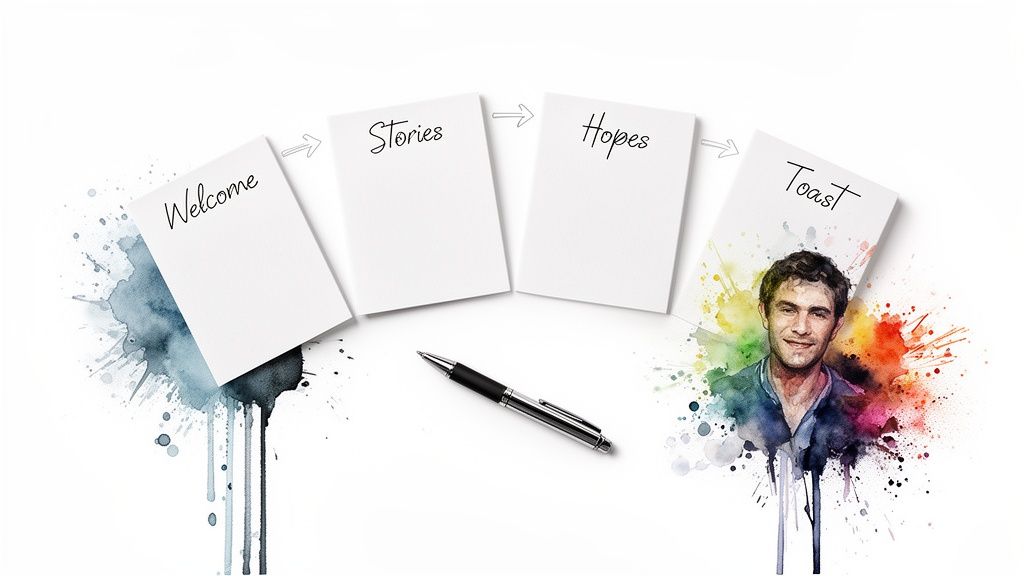
Don't think of it as writing a formal essay. Instead, see it as four simple building blocks. You'll start warm, share a story or two, look to the future, and end with a bang. This flow isn't just logical; it brings your audience along with you, building emotion from start to finish.
Your Welcoming Opening
First things first: you're the host. Your job is to make everyone feel welcome and set a warm, friendly tone for the celebration. No need for a grand monologue—just keep it short and sincere.
Kick things off by thanking everyone for being there. It's a nice touch to give a special nod to those who traveled a long way. This is also your moment to formally welcome your daughter's new spouse and their family into yours. This is a big deal, and it means a lot to say it out loud.
A simple line like, "On behalf of my wife and me, I want to thank you all for coming to celebrate this incredible day with us," is a perfect start. Then, you can turn to the other family and say, "And to [Spouse's Parents' Names], we are so happy to officially welcome you and your family into ours."
The Heartfelt Stories
This is the main event of your speech, where you move from host to dad. Here, you'll share one or two of those stories you brainstormed earlier to give everyone a glimpse into the person your daughter is.
The key is to show, not just tell. Instead of saying, "She was always so determined," tell the funny story about how she refused to take off her cowboy boots for a solid year in kindergarten. Those specific, vivid memories are what connect with people and get a laugh or a tear. This is what makes the speech yours.
Remember, you’re not writing a biography. Your goal is connection. One or two fantastic stories that capture her spirit will hit much harder than a long list of her accomplishments.
Sharing Your Hopes for the Future
After looking back, it's time to turn your attention forward. This is where you can share your excitement for the couple's future and offer your blessing—and maybe a little fatherly advice.
You can talk about the strength you see in their partnership or a quality you admire in the way they treat each other. Try to steer clear of generic marriage clichés. A personal, genuine wish will mean so much more. For example: "Watching the way you two look out for each other fills me with so much joy. My greatest hope is that you always remain each other's biggest fans."
The Celebratory Toast
And now for the grand finale. This is your chance to bring it all home with a powerful, celebratory toast. The hard work is done, so keep this part short and sweet.
Simply ask everyone to get on their feet, raise their glasses, and join you in a toast to the happy couple. You want to end on a high, energetic note. A classic, clear toast is always a winner: "To a lifetime of love, laughter, and happiness. To the newlyweds!"
This four-part roadmap is a reliable guide, but it's not a rigid set of rules. Let your personality come through. And remember, your words matter. According to wedding planners, speeches are what 75% of guests remember most vividly from a reception. If you're curious about other ways ceremonies are changing, it's worth exploring some of today's modern wedding traditions.
3 Examples of a Father of the Bride Speech You Can Steal
You’ve gathered your stories and have a solid structure in mind. Now comes the fun part: deciding how you’re actually going to say it all. The best speeches are the ones that sound like they're coming from a real person, not a template. If you're a naturally sentimental guy, trying to force a bunch of one-liners will feel awkward for you and everyone else.
Your personality is your secret weapon. It’s what will make your toast memorable. So, instead of trying to be the dad you think you should be, just be the dad your daughter already knows and loves.
Let's look at three common approaches. Think of these less as rigid scripts and more as starting points you can mix and match to find a style that feels right for you.
Example 1: The Humorous Dad
If you're the family's resident jokester, now is your time to shine. The goal here is to use lighthearted humor and gentle teasing to deliver a speech that's both funny and full of love.
The key is to keep it warm. Your jokes should never be at the expense of your daughter or her new partner. Instead, think about funny family stories, shared inside jokes, or those quirky personality traits that make her who she is. Maybe it’s that disastrous family vacation that, looking back, was actually hilarious.
A good laugh can make the sincere moments hit even harder. Use humor to warm up the crowd, and then land the plane with a genuinely heartfelt conclusion about how proud you are. It’s a classic combo for a reason.
Example 2: The Sentimental Dad
For the father who’s more comfortable with sincerity than stand-up, this is your lane. The Sentimental Dad speaks directly from the heart, focusing on the pride, love, and overwhelming joy of the day.
This style is often more direct. You can talk about the qualities you’ve always admired in your daughter, the moment you knew she’d grown into an incredible woman, and the happiness you see when she’s with her partner. These speeches can be shorter, but they carry a ton of emotional weight. Don’t shy away from being a little vulnerable—letting people see your genuine emotion is a powerful gift.
If you find it tough to put those big feelings into words, a tool like Wedding Speech Builder can help you find the right phrasing. Sometimes just a little inspiration is all you need to get your heartfelt message across perfectly.
Example 3: The Short-and-Sweet Dad
Look, nobody ever complained that a wedding speech was too short. If you’re a man of few words, lean into it. This approach is all about being concise, direct, and impactful.
You can skip the long, winding stories and get straight to the point. Start with a warm welcome, say a few meaningful sentences about your daughter and your new son- or daughter-in-law, and wrap it up with a heartfelt toast. It’s simple, effective, and lets everyone get back to the celebration. A short speech delivered with sincerity is always better than a long one that rambles.
Speech Tone and Structure Breakdown
To help you visualize how these different tones play out, here’s a breakdown of how each style might approach the core sections of a classic father of the bride speech. Use this table as a source of inspiration, not a strict rulebook.
| Speech Section | The Humorous Dad | The Sentimental Dad | The Short-and-Sweet Dad |
|---|---|---|---|
| The Opening | Start with a funny, self-deprecating line about public speaking or a lighthearted observation about the day. | Welcome everyone warmly and express how much this day means to you and your family. | A simple, warm welcome to all the guests for joining the celebration. |
| The Stories | Tell a funny (but not embarrassing!) story from her childhood that reveals her personality. | Share a touching memory that illustrates a quality you've always admired in her, like her kindness or strength. | Mention one key quality you love about your daughter, without a long story. "She's always been the most determined person I know." |
| The Partner | Offer some funny, "expert" marriage advice, then sincerely welcome your daughter's new spouse to the family. | Speak about the moment you knew they were perfect for each other and the joy they bring to your daughter's life. | State simply how happy you are that your daughter has found such a wonderful partner. |
| The Toast | Raise a glass with a final witty remark followed by a sincere wish for their future. | Offer a heartfelt blessing for their marriage, full of love and genuine emotion. | A classic and direct toast: "To a lifetime of love, laughter, and happiness. Cheers!" |
Ultimately, the best approach is the one that feels most like you. Whether you make them laugh, make them cry, or just make it quick, your daughter will appreciate that your words came straight from the heart.
Delivering Your Toast with Confidence
You’ve done the hard work. You’ve dug through memories, found the perfect stories, and built a speech you can be proud of. Now for the final, and most important, step: bringing it to life. How you deliver your speech is what will turn great words on a page into a truly unforgettable moment.
Feeling a bit nervous? That’s completely normal. It just shows how much this means to you. The trick is to turn those butterflies into positive energy. Remember, everyone in that room is on your side—they’re friends and family, excited to hear from you.
Practice for Flow, Not Perfection
Let's be clear: your goal isn't to memorize your speech word for word. That's a surefire way to sound stiff and rehearsed. Instead, you want to get so comfortable with the speech that it feels like second nature.
Read it out loud a few times. Try it in front of a mirror, or better yet, a trusted friend or your spouse. This is your chance to catch any clunky phrases and get a feel for the natural rhythm of your stories. Pay special attention to how you move from your opening welcome into the main part of your speech, and then how you transition to the final toast.
Think of your notes as a safety net, not a script. It’s more than okay to have them with you. Just use a big, easy-to-read font or number your note cards so you can find your place with a quick glance, not by burying your head in the paper.
Finding Your Rhythm on the Big Day
Your delivery is about so much more than what you say—it’s about how you make the room feel. One of the biggest secrets from experienced speakers is mastering your pacing. When you’re about to deliver a funny line, pause for a beat before the punchline. When you’re sharing a more tender memory, slow down and let the emotion have its moment.
Here are a few practical tips that make a huge difference:
- Look Up and Connect: Don't get locked into reading your notes. Make eye contact with different people around the room, especially your daughter and her new partner. A warm, smiling glance makes everything feel more personal.
- Speak Slower Than You Think You Need To: When you're nervous, you tend to speed up. Before you start, take a deep breath. Make a conscious effort to speak just a little more slowly than you would in a normal conversation. To you, it might feel slow, but to the audience, it will sound just right.
- Let Your Posture Do Some Talking: Stand tall and smile. Don't worry about grand gestures; just let your hands move naturally. A confident, open posture conveys warmth and sincerity before you even say a word.
At the end of the day, this isn't a performance—it's a heartfelt message. The speeches that people remember are the ones where real emotion comes through. Let them see your pride. Let them feel your love. That genuine authenticity is what will stick with everyone long after the champagne glasses are empty.
Answering Your Final Questions
Even with a perfect speech written, a few last-minute questions always seem to pop up. It’s completely normal. You've spent weeks, maybe months, helping plan this day, and now that your moment in the spotlight is approaching, you want everything to be just right.
Think of this as your final once-over. Here are the most common questions we hear from fathers of the bride to help you walk up to that microphone feeling cool, calm, and collected.
How Long Should This Speech Really Be?
This is the big one, isn't it? You want to say everything in your heart, but you also don't want to see guests' eyes start to glaze over.
The sweet spot is three to five minutes. That's all you need. It’s long enough to welcome the guests, tell a great story or two, and make a heartfelt toast. It’s also short enough to keep everyone's attention before the champagne gets warm. Time yourself reading it out loud at a relaxed, normal pace. If you're hitting the four-minute mark, you're golden.
Who Exactly Do I Need to Thank?
Yes, a few thank yous are definitely in order. As a host of this incredible celebration, you're setting the tone for the evening.
Your thank-you list doesn't have to be long, but it should be sincere. Make sure you hit these key people:
- The guests: Thank them for coming, with a special nod to those who traveled a long way to be there.
- Your daughter’s new spouse: This is your moment to officially and warmly welcome them into the family.
- Their parents: It’s a wonderful gesture to acknowledge your new counterparts. A simple "To John and Jane, thank you for raising such a wonderful man/woman" is perfect.
- Your spouse: Don't forget your co-host and partner in crime! A quick, loving mention is a beautiful touch.
When Am I "On"? The Timing of the Speech
Traditionally, the father of the bride kicks things off. You’re often the first to speak, usually right before dinner begins. It works well because your speech acts as the official welcome and a toast to get the party started.
However, modern weddings can have their own flow. The best man or maid of honor might go first. The only way to know for sure is to check with the happy couple or their wedding planner. They’ll have a timeline for the toasts. Knowing your spot in the lineup will let you relax and actually enjoy your meal.
Turning decades of memories and love into a few minutes of words is no small feat. If you want a little help shaping your stories into a speech that feels just right, Wedding AI can guide you in crafting a polished, memorable toast.


