
When you stand up there, mic in hand, one of the biggest questions on your mind is likely, "how long should this thing actually be?" The answer, thankfully, is simpler than you might think. You're aiming for the "Goldilocks zone" of between 3 and 5 minutes.
This gives you just enough time to share something meaningful and memorable, but it’s short enough to keep everyone—from the kids' table to grandma—completely engaged.
Finding the Sweet Spot for Your Best Man Speech
Think of your speech as the highlight reel of your friendship, not the full-length documentary. Your goal is to deliver a tight, powerful tribute that lands perfectly without overstaying its welcome. If you go under three minutes, your toast might feel a bit abrupt or impersonal. Stretch it past the five-minute mark, and you risk watching people's eyes start to glaze over.
Sticking to that 3-5 minute window is a practical way to ensure you can nail the essentials without rushing. You'll have just the right amount of time to:
- Briefly introduce yourself and explain your connection to the groom.
- Share one or two great stories that reveal his character.
- Genuinely welcome his new partner into the family or circle of friends.
- Wrap it all up with a clear, heartfelt toast to the couple.
It’s completely normal to feel some nerves, but having a clear time limit is one of the best ways to calm them. Knowing you just need to fill a few minutes helps you focus your preparation. In fact, having a defined target is a huge confidence booster.
A perfectly timed speech shows respect for the guests and the event's schedule, making your moment that much more impactful. This timing advice applies whether you're the best man, maid of honor, or father of the bride. For a deeper dive, check out this helpful guide from StagMadness. Knowing your target turns a mountain of anxiety into a manageable—and even enjoyable—task.
Structuring Your Speech for Maximum Impact
A great speech isn't just about the total time on the clock; it's about how you use every second. Knowing the ideal length for a best man speech is your starting line, but a clear structure is what separates a good toast from an unforgettable one.
Let’s map out your 3 to 5-minute masterpiece so it flows perfectly. You can think of it as having three simple parts: your introduction, your story, and the grand finale—the toast. Giving each section its own time slot is the secret to creating a balanced speech that feels deliberate, not rambling.
The Blueprint for a 4-Minute Toast
A well-paced speech respects everyone's time while still giving you room to say something that truly matters. Here’s a simple breakdown you can use every time:
The Opening (30-45 seconds): Get straight to it. Introduce yourself and explain how you know the groom. Keep it quick, warm, and confident to capture everyone's attention. This isn't the time for a long backstory, just a simple "hello."
The Story (2 to 2.5 minutes): This is the heart of your speech. Dedicate the bulk of your time here to one or two well-told anecdotes about the groom. Your goal is to show everyone who he is, not just list his accomplishments.
The Transition and Toast (45-60 seconds): This is where you bring it all home. Smoothly pivot from your stories about the groom to celebrating the couple. Share a few kind words about his partner and what makes their relationship special, then raise your glass for a clear, heartfelt toast.
This visual guide really nails down why timing is everything.
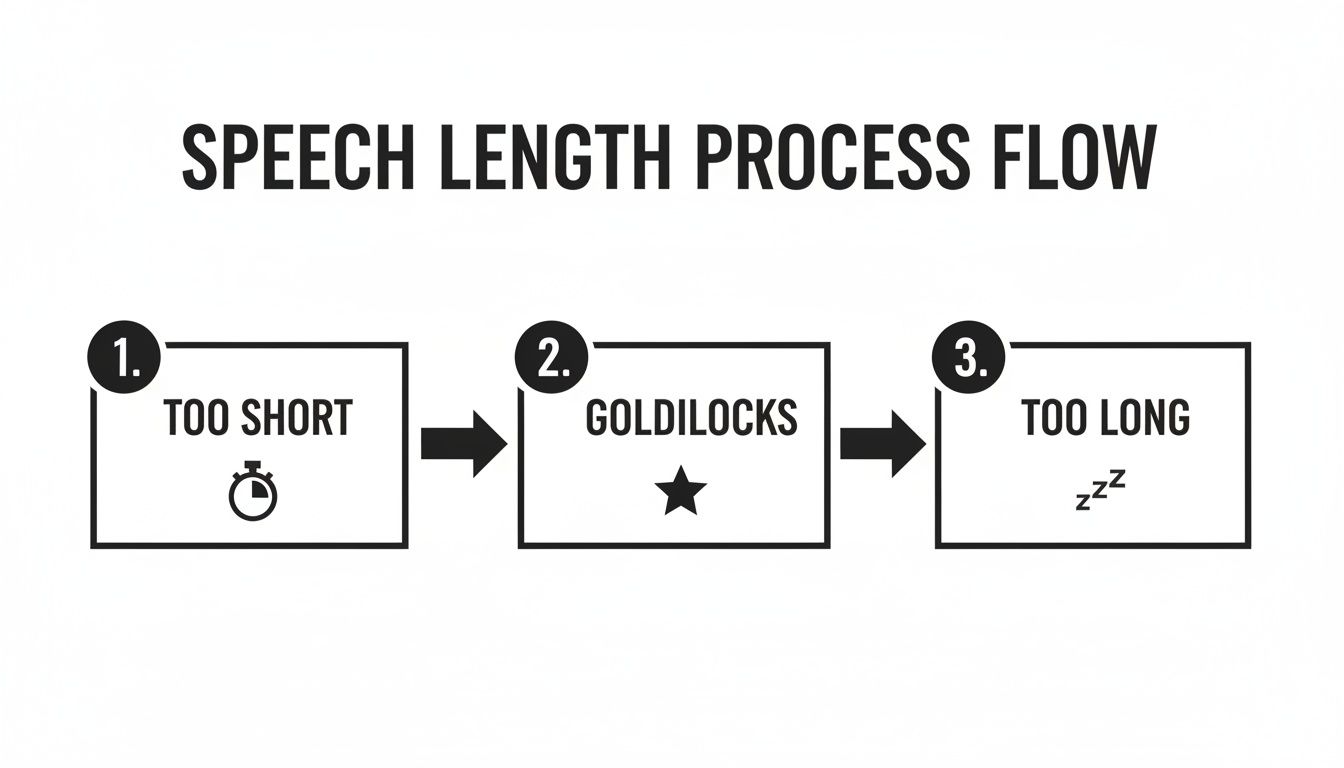
As you can see, hitting that "Goldilocks" zone is what makes a speech feel just right—engaging enough to make an impact but brief enough to keep the party moving.
Following this structure helps you make every word count. If you're having trouble cutting down your stories or organizing your thoughts, a tool like Wedding AI can be a real asset. It can take your personal memories and help structure them into a perfectly paced draft, making it much easier to hit these timings naturally.
Mastering Storytelling Within Your Time Limit
The true magic of a best man speech isn't about how long it is—it's about the story you choose to tell. A good story makes your friendship with the groom feel real to everyone in the room, but the trick is to deliver it without rambling. Every word has to earn its place.
Think of yourself as a film editor. You wouldn't show the audience every single take; you’d select the one or two moments that truly define the main character. Your job is to find that one perfect story that showcases who the groom really is—his sense of humor, his loyalty, or his kind heart.
Choosing the Right Story
Not every story is wedding-appropriate. As you sift through your memories, you should run them through this quick gut-check to ensure you land on a winner.
- Is it inclusive? Steer clear of inside jokes. Your goal is to make everyone feel like they're in on the moment, not leave half the room feeling confused.
- Is it respectful? This is a critical one. You should avoid stories that might genuinely embarrass the groom or his partner. You're aiming for a laugh, not a cringe.
- Does it have a point? A great story should always circle back to the reason you're all there: to celebrate the couple and their future together.
A truly memorable anecdote is short and sweet. It has a clear beginning, a middle, and an end, and it all ties back to a quality in the groom that shows what a great husband he’ll be.
This focused approach is your best strategy for staying on track. While you might hear that a seasoned pro can hold a room for ten minutes, that's a high-wire act. For most of us, sticking to a shorter, punchier story is not only safer but usually far more powerful.
Nailing the storytelling is the key to getting the feel of the speech length just right. If you’re finding it tough to shape your memories into a tight narrative, a tool like Wedding AI can be a great help in structuring your personal stories so they fit perfectly.
How to Rehearse Your Speech and Perfect Its Pacing

Getting the words on paper is just the first step. The real magic happens in the delivery, and that means you absolutely have to rehearse. Timing yourself isn't just a suggestion—it's the only way you’ll find out if that killer story is a tight, punchy 2-minute anecdote or a rambling 7-minute epic.
Your natural speaking speed is the key variable here. A speech that looks perfect on the page often clocks in much longer once you add real-world pauses for laughter or dramatic effect. Practice is where you close that gap between theory and reality.
Fine-Tuning Your Delivery
The purpose of practicing isn't just to memorize words; it's to make them sound like they're coming from you, not a script. A stiff, robotic reading can drain the life out of even the most sincere message.
- Practice Out Loud: Don't just read it in your head—your brain is far too forgiving. You need to hear how the sentences flow, where the rhythm is, and which phrases make you stumble.
- Record Yourself: It might feel a bit awkward, but pull out your phone and film a practice run. It’s the single best way to catch yourself talking a mile a minute or peppering your speech with "ums" and "ahs."
- Embrace the Pause: Silence can be your best friend on stage. A well-timed pause before a punchline makes it funnier. A moment of quiet before a heartfelt wish lets it sink in. You should practice putting these pauses in deliberately.
Your goal during rehearsal isn't to become a perfect orator. It’s to become so familiar with your material that you can deliver it with confidence, making genuine eye contact instead of reading from a page.
Knowing When and What to Cut
Once you start timing yourself, you will almost certainly find that you need to trim something. This is where you have to be ruthless. If a joke feels a little clunky or a story requires too much setup, take out your red pen. Cut it.
If you're finding it tough to hit that sweet spot, tools can give you a head start. For example, Wedding AI has pacing controls built in, helping you structure your draft to fit that ideal 3 to 5-minute window from the get-go. This can make your rehearsal process less about frantic cuts and more about polishing your performance.
How to Adjust Your Speech Length for Any Wedding
One size definitely doesn't fit all when it comes to wedding speeches. A great toast isn't just about what you say—it's about how it fits into the flow of the entire day. The key is to learn to read the room and match your speech to the couple’s unique style.
So, how do you do that? Start by considering the context. Is this a black-tie, sit-down dinner with a carefully planned schedule and multiple speakers? Or is it more of a laid-back party in a barn where everyone is mingling freely? The vibe of the wedding is your biggest clue.
When to Keep It Short and Sweet
A shorter, punchier speech is often the best approach for more casual or fast-paced receptions. You’ll want to aim for brevity in these situations:
- You're part of a lineup: If there are multiple speakers scheduled (like the maid of honor, parents, and perhaps the couple), keeping your speech to a tight 2-3 minutes is a respectful choice. It keeps the energy up and prevents "toast fatigue."
- The vibe is super informal: For a backyard BBQ or a cocktail-style reception, a long, winding speech can feel out of place. A quick, funny story and a warm toast will land much better.
When You Have a Little More Room
On the other hand, some weddings practically invite a longer, more detailed speech. You can comfortably stretch into the 4-5 minute range when:
- You're the main speaker: If you're the only one giving a major speech, or maybe one of just two, you have the floor. This gives you the space to tell a slightly more developed story without feeling rushed.
- It’s a traditional, formal dinner: A classic reception with multiple courses often has specific time slots built in for speeches. Your audience will be seated, attentive, and ready for a more structured toast.
A good best man speech should add to the celebration, not take it over. Experts across the board agree that the magic number is almost always under seven minutes. As the folks at Hitched explain in their speech guide, audience attention can really start to drift after the 5-7 minute mark.
Speech Length Adjustments by Wedding Type
To help you nail the timing, think about the wedding's overall feel. Some events are built for speed, while others have a more leisurely pace.
| Wedding Type | Suggested Speech Length | Key Considerations |
|---|---|---|
| Formal Black-Tie | 4-6 minutes | Guests expect structured entertainment. There is a set schedule, but don't overstay your welcome. |
| Traditional Dinner | 3-5 minutes | This is the classic "sweet spot." You have a captive audience, so you can tell a good story. |
| Casual/Backyard | 2-3 minutes | Keep it short, funny, and heartfelt. Guests are mingling and the vibe is relaxed. |
| Destination Wedding | 2-4 minutes | Often a smaller group. You can be a bit more personal, but remember everyone is in vacation mode. |
No matter the format, remember your primary goal: to honor the couple and get the celebration back on track. A speech that feels perfectly paced for the moment is a gift to everyone in the room.
Common Speech Length Mistakes to Avoid
Even with the best of intentions, it's easy to fall into a couple of classic traps when it comes to speech length. Let's walk through the most common pitfalls so you can sidestep them entirely.
The two biggest blunders are complete opposites, but they're equally problematic: the never-ending monologue and the toast that's over in a flash. Both stem from misreading the room and what the moment truly requires.
The Ten-Minute Marathon
We've all been there. The best man gets up, full of love for his friend, and launches into story after story. While the sentiment is admirable, any speech that starts creeping past the 7-minute mark begins to test everyone's patience. The energy in the room dips, the wedding schedule gets thrown off, and your most meaningful points get lost.
Your goal is to leave them wanting just a little more, not checking their watches. A marathon speech, no matter how heartfelt, ends up being remembered for its length, not its message.
The Ninety-Second Sprint
On the flip side, you have the speech that's finished almost before it starts. A toast that wraps up in under two minutes can feel a bit abrupt, almost like an afterthought. It might come across as rushed or, even worse, as if you didn't put much thought into it.
Brevity is a virtue, but you don't want to undersell the moment. An overly short speech can leave the couple and their guests feeling a little let down, as if a major part of the celebration was skipped over.
That perfect balance is the real secret. You're aiming for something that feels both heartfelt and significant without hijacking the reception. Sticking to that 3-5 minute sweet spot is your surest way to deliver a tribute that's both powerful and perfectly timed.
Still Have Questions? Let's Talk Speech Length
Do you have a few nagging questions about getting the timing just right? You're definitely not alone. Here are some of the most common things speakers worry about when it comes to the length of their speech.
How Many Words Should a 5-Minute Speech Be?
Most people speak at a comfortable pace of around 130 to 150 words per minute. So, for a 5-minute speech, you should aim for a script that's between 650 and 750 words.
You can use this as your target word count. It gives you something concrete to aim for as you're writing and, more importantly, as you're editing.
What if I Talk Too Fast When I'm Nervous?
This happens to almost everyone. Adrenaline kicks in, and suddenly you're racing through your carefully crafted words. This is exactly why practicing out loud is non-negotiable.
When you rehearse, make a conscious effort to speak more slowly than you think you need to. You should also build in pauses for dramatic effect or to let a joke land. If you know you're a speed-talker, just aim for a lower word count from the start—perhaps closer to 600 words. That way, you have a built-in buffer. Even if you speed up, you’ll land in that sweet 4-minute spot instead of a breathless 3-minute blur.
Is It Better to Be Too Short or Too Long?
When in doubt, always go shorter.
A punchy, heartfelt 3-minute speech that leaves everyone smiling is infinitely better than a rambling 8-minute monologue that has guests checking their watches. Be the person who says what they mean, makes their point with warmth and humor, and then gracefully hands back the mic. The guests (and the happy couple) will thank you for it.
Feeling confident about your timing but struggling to find the right words? Wedding AI can help you craft a perfectly paced speech from your personal stories in just a few minutes. Get started at https://weddingai.com.


