
Before you write a single word, let's tackle the biggest question on your mind: how long should this speech actually be?
The perfect wedding speech finds that sweet spot between 3 and 5 minutes. For most people, that works out to be around 450 to 750 words. Think of it as the ideal length to tell a wonderful story and share your heartfelt wishes without losing the crowd. It’s long enough for your words to carry weight but short enough to keep every guest hanging on your every word.
Finding Your Perfect Speech Length
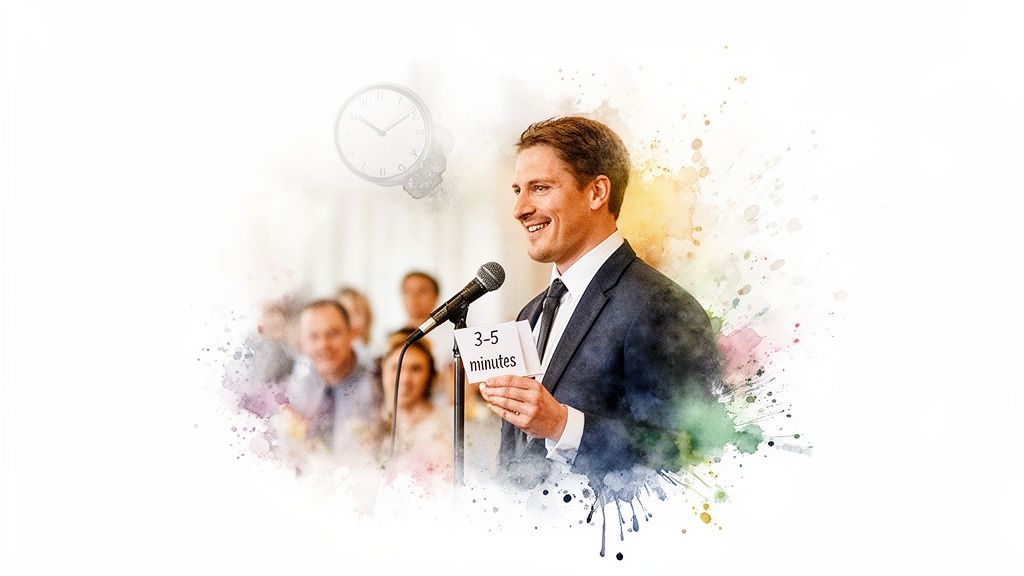
When someone asks you to give a speech, it’s natural to want to include every memory you have with them. While that instinct comes from a beautiful place, a speech that tries to cover everything often loses its impact. Your true goal is to deliver a toast that feels genuine and, just as importantly, respects everyone’s time.
The good news? You have a clear target to aim for. Whether you’re the best man crafting a legendary toast or the father of the bride preparing to bring tears to everyone's eyes, that 3-to-5-minute window is your key to success.
Why Brevity Matters
A short speech is a powerful speech. It's truly that simple.
Keeping it brief forces you to be selective, to zero in on the stories and feelings that matter most. It’s like a great movie trailer—it shows you the best parts and leaves you excited for more, instead of giving away the entire plot.
This isn't just modern advice; it's wisdom that has stood the test of time. Old-school etiquette experts and today's top wedding planners all agree: 3 to 5 minutes is the magic number. Since the average person speaks at about 150 words per minute, that lands you right around the 450–750 word mark.
Studies have even shown that after five minutes, you risk losing your audience. Guest attention can drop by as much as 40%, and you might see people starting to glance at their watches or eye the bar. If you want to dig deeper, you can discover more insights about wedding speech best practices to help you plan.
Your speech is a highlight, not the main event. Keeping it tight ensures your words are a memorable part of the celebration, not an interruption.
If you find your draft is running long, a tool like Wedding AI can be a great help. It uses smart prompts to help you focus your story and has pacing controls designed to guide your final draft into that golden time frame.
Why 3 to 5 Minutes Is the Golden Rule for Toasts
So, where does that 3-to-5-minute rule come from? It might feel a bit random, but I promise you, it’s not. Think of it as the perfect container for a powerful story—just long enough to share something meaningful, but short enough to keep everyone completely hooked.
This "golden rule" is a practical response to a simple truth: a wedding reception is a busy, joyous place. Guests are buzzing with excitement, catching up with friends, and already thinking about the cake and the dance floor. Your speech has to cut through that happy chaos and grab their attention right away.
The Science of a Captivated Audience
The moment you stand up with that microphone, you have everyone’s undivided attention. They are on your side, waiting to hear what you have to say. But that goodwill has a shelf life. After about five minutes, a subtle shift happens. The initial focus starts to fade, and people's minds naturally begin to wander.
It’s not personal, and it has nothing to do with how wonderful your story is. It’s just human nature. A shorter, punchier speech works with this natural rhythm instead of fighting against it. It comes across as a thoughtful gift to both the couple and the guests, delivering genuine emotion without overstaying its welcome. Your goal should always be to leave them wanting more, not checking their watches.
A great toast is like a perfect punchline. The impact comes from its precision and timing. By keeping your speech concise, you ensure your key messages—the love, the laughter, the heartfelt wishes—are what guests remember most.
The Real-World Impact of Going Overtime
This isn't just a theory; wedding planners and photographers see it play out every weekend. Data from over a thousand weddings shows a startling spike in guest boredom—by a massive 52%—once a speech pushes past the seven-minute mark. Even worse, nearly a third of guests admit to pulling out their phones. You can read more about how timing affects the guest experience to see why event professionals are so strict about this.
Imagine this: you're the maid of honor, and you're up right after someone just gave a rambling ten-minute speech. The energy in the room has dipped. Your perfectly polished, funny, and heartfelt three-minute toast will feel like a breath of fresh air. You’ll instantly win the crowd back and get the celebration back on track.
At the end of the day, your job is to add a beautiful, memorable moment to the wedding. Sticking to that 3-to-5-minute sweet spot is the best way to make sure you do. It shows respect for everyone's time and, more importantly, proves you put in the effort to make every word count.
Matching Your Speech Length To Your Role
Not every speech needs to be an epic tale. In fact, some of the most memorable ones are short and sweet. Your role at the wedding is the single biggest factor in determining how long you should hold the microphone.
Each speech has a specific job to do. A parent's toast is about warmth and welcome. The best man is there to land a few jokes and a heartfelt story. Understanding your unique purpose is the key to editing your speech down to its most powerful form. A father of the bride doesn't need to list every childhood achievement, and a maid of honor doesn't need to explain every inside joke.
This table gives you a quick breakdown of what each speaker should focus on and how that influences their ideal speech length.
Speaker Role vs. Speech Focus and Timing
| Speaker | Primary Focus | Recommended Time | Key Elements |
|---|---|---|---|
| Best Man / Maid of Honor | Entertain & Celebrate | 4-6 minutes | A great, often funny, personal story that highlights the couple's bond. |
| Parents of the Couple | Welcome & Bless | 3-4 minutes | Gratitude for guests, welcoming the new family member, a short heartfelt wish. |
| The Couple | Gratitude | 1-2 minutes | A quick thank you to family, the wedding party, and all the guests. |
Let's explore why each of these timings works so well.
Best Man and Maid of Honor Speeches
As the best man or maid of honor, you’ve been given a bit more runway, typically landing in that 4-to-6-minute range. This is just enough time to share a defining story—often a funny one—that shows who your friend is at their core and celebrates the amazing partnership they’ve found.
Your practical tip here is to not try cramming in five different anecdotes. Instead, pick one killer story that perfectly illustrates why your friend is so great and why their new spouse is the perfect match for them. This focused approach makes your speech feel both meaningful and tight.
Parents of the Couple Speeches
If you're a parent of the bride or groom, your job is to radiate grace and gratitude. Your toast should feel warm, welcoming, and completely sincere. The ideal length here is a bit shorter, right around 3 to 4 minutes.
Your main goals are to welcome everyone, share a brief, heartfelt thought about your child, and officially welcome their new spouse into the family. A short, sweet story from their childhood is always a winner, but keep the focus on the couple and this joyous moment. Keeping it brief makes your words feel more potent and loving.
The Couple's Thank You Speech
When it's your turn to speak as a couple, brevity is your best friend. A quick 1-to-2-minute thank you is all you need. Your guests already know you're grateful they're here, so there’s no need for a long, drawn-out speech.
Simply thank your families, your wedding party, and all your guests for celebrating with you. Keep it short, sweet, and to the point. Then you can get everyone back to the dance floor!
This chart shows how the most memorable and impactful toasts consistently hit that timing sweet spot.
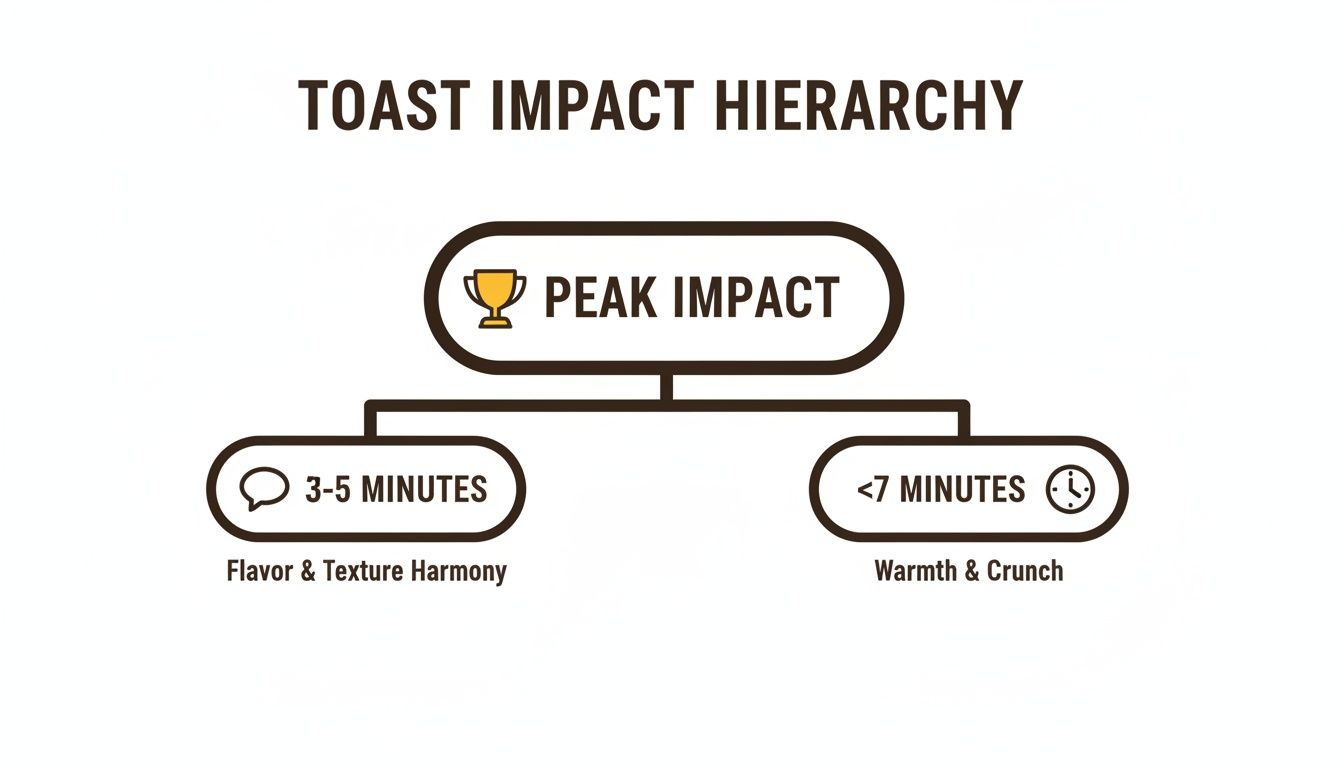
The takeaway is clear: sticking to that 3-to-5-minute window is the surest way to deliver a speech with maximum emotional punch.
At the end of the day, your role defines your speech's mission. A best man entertains, a parent welcomes, and the couple gives thanks. Aligning your length with that mission is the secret to a perfect toast.
If you’re having a tough time fitting your story into the right timeframe, a tool like Wedding AI can be a lifesaver. It asks questions based on your specific role (like "best man" or "father of the bride") to help you zero in on the best ideas and then drafts a speech that fits these proven time guidelines.
How to Time Your Speech Like a Pro
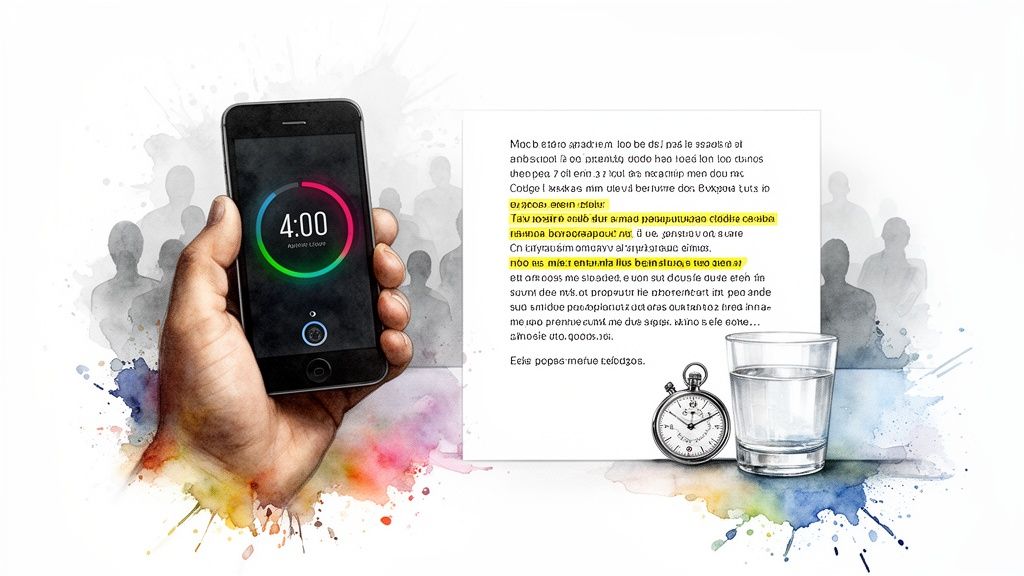
Knowing your target time is one thing, but hitting that mark when the pressure is on is another challenge entirely. The secret to mastering your timing comes down to one thing: practice. I don't just mean reading your speech in your head—I mean rehearsing it out loud, as if you're actually delivering it.
The very first time you read your draft aloud, use a stopwatch. You’ll probably be surprised. What looks like a three-minute speech on paper can easily clock in at five minutes once you account for natural pauses and dramatic effect. This first run-through gives you a realistic baseline to work from.
Factor In the Unpredictable Moments
A great speech isn't a monologue; it's a conversation with the room. You need to build a little wiggle room into your timing for all the moments you can't control but can definitely anticipate.
- Audience Laughter: If you’re the best man with a killer punchline, pause for a few seconds after it. Great jokes need room to breathe, and talking over the laughter is a classic mistake.
- Emotional Pauses: A heartfelt story from a parent might bring a lump to your throat. These moments are beautiful and create connection, so don't rush through them. Give yourself permission to take a breath.
- Applause and Reactions: A particularly sweet memory might earn a round of applause. Let it happen. These reactions build energy and make your speech far more memorable.
The most common timing mistake is forgetting that a live audience adds time. A speech read alone in five minutes will almost always run longer in front of a crowd.
Pacing Is Everything
Your delivery speed has a huge impact on both your timing and how well you connect with guests. Talking too fast is a dead giveaway for nerves, and your carefully chosen words can get lost. Aim for a deliberate, confident pace—slow enough for everyone to hang on every word.
The average person speaks at about 150 words per minute. If you notice you're flying through your practice runs, it’s a clear signal to either cut some content or consciously slow down. For example, a 600-word speech should take you around four minutes. If you’re blazing through it in three, you're going too fast.
If you need a hand with this, a tool like Wedding AI can be a fantastic co-pilot. It gives you a word count as you write and has features designed to help keep your draft in that perfect 3-5 minute range, taking a lot of the guesswork out of the process.
Common Wedding Speech Timing Mistakes To Avoid
Even with the best intentions, it's incredibly easy to fall into a few common timing traps. Knowing what these pitfalls look like is the first step to gracefully sidestepping them and ensuring your toast is memorable for all the right reasons.
The most common mistake? Trying to tell too many stories. As the maid of honor, you might feel pressure to recap your entire friendship, from grade school to that college road trip. But a highlight reel often waters down the impact. Your actionable tip is to choose one powerful anecdote that says it all.
Forgetting Your Audience
Another easy trap is getting lost in inside jokes. A quick, shared reference can connect with the couple, but a speech built entirely on stories that only two people understand will leave everyone else feeling like an outsider. Remember who you're talking to—it’s everyone from their great-aunt to their new boss.
A great speech makes everyone feel like they’re in on the secret. Aim for stories with universal themes—like friendship, funny mishaps, or overcoming a challenge—even if the details are personal.
But the single biggest mistake is deciding to "wing it." Spontaneity sounds great in theory, but without a plan, it’s a one-way ticket to a rambling, unfocused, and way-too-long speech. Even the most natural-sounding speakers prepare, and that preparation is a sign of respect for the couple and their guests.
A Checklist of What Not to Do
To keep your timing tight and your message clear, here are a few things to consciously avoid.
- Don't list memories chronologically. A timeline of your friendship isn't nearly as powerful as a single, well-told story that reveals something essential about the person you're celebrating.
- Don't skip practice runs. This is non-negotiable. Reading your speech out loud, with a timer, is the only way to know how long it actually is and find the spots that might trip you up.
- Don't write a novel. If you look down and your draft is creeping past 800 words, it’s your cue to start editing. Be ruthless. Cut anything that doesn’t directly support your main point.
Steering clear of these common blunders will put you miles ahead. If you're having a hard time trimming things down, Wedding AI can be a huge help in focusing your story and shaping your ideas into a perfectly timed toast.
Putting It All Together: Your Speech Writing Timeline
Now that you have your timing goals locked in, the last piece of the puzzle is building a simple, stress-free schedule. Trust me, you do not want to be frantically scribbling notes on a napkin right before you’re called to the mic.
Giving yourself a few weeks to prepare turns writing a speech from a dreaded chore into an enjoyable process. A great speech is built, not rushed. By breaking the work into small, manageable steps, you can craft something polished and personal without any last-minute panic.
This timeline is your road map, designed to guide you from scattered ideas to a confident delivery.
Your Simple Speech Writing Schedule
A little structure goes a long way. This plan spreads the work out, giving you plenty of time to get your ideas right and practice until your delivery feels completely natural.
3-4 Weeks Out: Brainstorm and Outline. This is the fun part. Start by jotting down your favorite stories, inside jokes, and heartfelt memories. Once you have a collection, organize them into a simple outline with a clear beginning, middle, and end.
2 Weeks Out: Write the First Draft. Don't worry about perfection. The goal is to get all your thoughts onto paper. Just focus on telling your story from the heart. This is a great time to use a tool like Wedding AI, which can help structure those raw ideas into a coherent first draft.
1 Week Out: Refine and Edit. Now it's time to be ruthless. Read your speech out loud and trim anything that doesn't add to your core message. This is also your final check on length. Revisit the question: how long should a wedding speech be? Check your word count and time yourself—you should be aiming for that 3-to-5-minute sweet spot.
The Final Days: Practice, Practice, Practice. Run through your speech a few times each day. Practice in front of a mirror, record yourself on your phone, or ask a trusted friend to be your audience. The goal is to get comfortable with the rhythm and flow of your words.
Pro Tip: Your final practice runs aren't about memorizing every single word. They’re about internalizing the story. When you know the emotional arc you want to create, the words will follow more naturally, making you sound authentic and prepared.
Following a simple timeline like this ensures you’ll feel calm and ready when it’s your turn to raise a glass.
Answering Your Top Wedding Speech Timing Questions
Even with the best guidelines, a few practical questions always pop up when you're staring at a blank page. Let's get into the nitty-gritty and answer some of the most common timing concerns.
Is It Ever Okay For a Wedding Speech To Be Longer Than 7 Minutes?
While it's not a hard-and-fast rule, you should think of seven minutes as a serious red flag. Going over is a big gamble.
The only time you might consider it is if you're the only person speaking or you have a truly once-in-a-lifetime story. For 99% of wedding toasts, pushing past that seven-minute mark is where you start to see guests' eyes glaze over. If you genuinely believe your speech needs that extra time, you absolutely must clear it with the couple first. Honestly, though, a tighter, more focused speech is almost always more powerful.
How Many Words Is a 4-Minute Speech?
A good benchmark to keep in your head is 150 words per minute. It’s a comfortable, natural speaking pace for most people.
Doing the math, a four-minute speech lands right around 600 words. When you're writing, aiming for that number is a fantastic starting point. It keeps you from rambling and gives you a clear target. Of course, this is just an estimate. The only way to know your true timing is to say it out loud.
What Should I Do If There Are a Lot of Speakers?
If you see a long list of names on the speech docket, your new mantra is "short and sweet." In this situation, brevity is a gift to everyone in the room.
Your goal should be a tight three-minute toast, which is about 450 words. Keeping it concise is a huge sign of respect for the other speakers, the wedding timeline, and the guests who are eager to get to the dancing.
When you keep your part brief, you help the whole evening run smoothly. As a practical tip, have a quick chat with the emcee if you can. They can give you a heads-up on the total time allotted for speeches, which will help you dial in your timing perfectly.
Turning your favorite memories into a well-timed speech that feels completely you can be a tall order. If you need a hand finding the right words and the right length, Wedding AI can help you shape your stories into a toast that hits that sweet spot. It's designed to help you build a draft that fits perfectly in that ideal 3-5 minute window. Get started with Wedding AI.


