
When it comes down to it, a great wedding speech has three key ingredients: a personal story that says something real about the couple, a runtime of 3-5 minutes, and a genuine toast to their future. Stick to that recipe, and you’ll deliver something memorable that respects everyone’s time and keeps the focus where it belongs—on the happy couple.
Your Guide to an Unforgettable Wedding Speech
The moment someone hands you the microphone, the whole room tunes in. It’s a moment filled with anticipation—both yours and the guests'. The goal here is to deliver a speech that feels warm, personal, and lands perfectly. Think of this guide as your trusted friend, here to walk you through every step, from digging up authentic stories to delivering your words with confidence.
Turning Nerves into an Ovation
Public speaking consistently ranks as a top fear, but let me tell you a secret: every single person in that room is rooting for you. They aren't expecting a perfect TED Talk; they just want to hear a sincere tribute from someone who loves the couple. We’ll work on channeling those nerves into something powerful.
This guide has you covered, whether you’re the best man trying to balance humor with heart, the maid of honor sharing a touching memory, or a parent expressing a lifetime of love.
You'll learn how to:
- Pinpoint your specific role and the unique perspective only you can offer.
- Uncover the perfect stories that truly capture the essence of their relationship.
- Structure your speech for a natural flow and maximum emotional impact.
- Dodge the common clichés and inside jokes that can make guests' eyes glaze over.
The perfect speech is almost always shorter than you think. We’ll get into the nitty-gritty of hitting that 3 to 5-minute sweet spot. And if you find yourself staring at a blank page, a tool like Wedding AI can be a fantastic co-pilot, helping you organize your thoughts into a solid first draft.
Let's get started on creating a speech that truly honors the day.
First Things First: Finding Your Foundation
Before you even think about putting pen to paper, the real work begins. The secret to a speech that lands beautifully is laying the right groundwork. This is all about understanding your relationship with the couple, your specific role, and who you'll be speaking to. Think of it as gathering your ingredients before you start cooking.
So, who's going to be in the room? Picture the crowd. Is it a small, cozy gathering of their nearest and dearest, or a big bash with everyone from college roommates to great aunts? The stories that resonate with a tight-knit group of friends might be different from what you’d share with a more formal, diverse audience. Getting a feel for the crowd is key to striking the perfect tone.
Now, think about your role. Your unique perspective is your superpower here. A best man often brings the humor and history, while a maid of honor might share stories that speak to the depth of her friendship. As a parent, your speech is colored by a lifetime of love and pride. Your relationship is what gives your speech its distinct emotional flavor.
Mining for Story Gold
The best speeches are built on stories, not just compliments. You're searching for specific, vivid anecdotes. Don't just say the groom is generous; tell the one about him driving three hours in a downpour to help you change a tire. That's the stuff people remember.
The most powerful speeches don’t just tell us what the couple is like; they show us. Your mission is to find a moment that reveals something true and meaningful about who they are.
Try this quick brainstorming exercise. Set a timer for 15 minutes and just scribble down whatever comes to mind for these prompts:
- What was your first impression of the bride or groom? Be honest!
- When did you know they were the real deal for each other?
- What’s a hilarious or heartwarming memory that perfectly captures their personality?
- Can you recall a time they showed incredible kindness, strength, or a killer sense of humor?
Don't edit yourself. Just get it all out. This is where you’ll find the gems. Modern weddings have thankfully moved beyond stuffy traditions, placing a huge emphasis on personal stories. Data on wedding trends actually shows a major shift toward speeches that tell a unique narrative instead of just following a script. You can explore more of these future-of-marriage forecasts on The Knot Worldwide to see just how much personalization matters now.
If you hit a wall, this is the perfect time to bring in a little help. A tool like Wedding AI is designed for this exact moment. It acts like a creative partner, asking smart questions to help you unearth those forgotten memories and identify which ones have the most potential. You’ll quickly see a central theme emerge, giving your speech the authentic heart it needs.
How to Structure Your Speech for a Perfect Flow
A well-structured speech is a gift—both to you and the audience. It gives you a clear roadmap, which makes it far easier to remember what you want to say. For the guests, it means they can relax and follow along without getting lost.
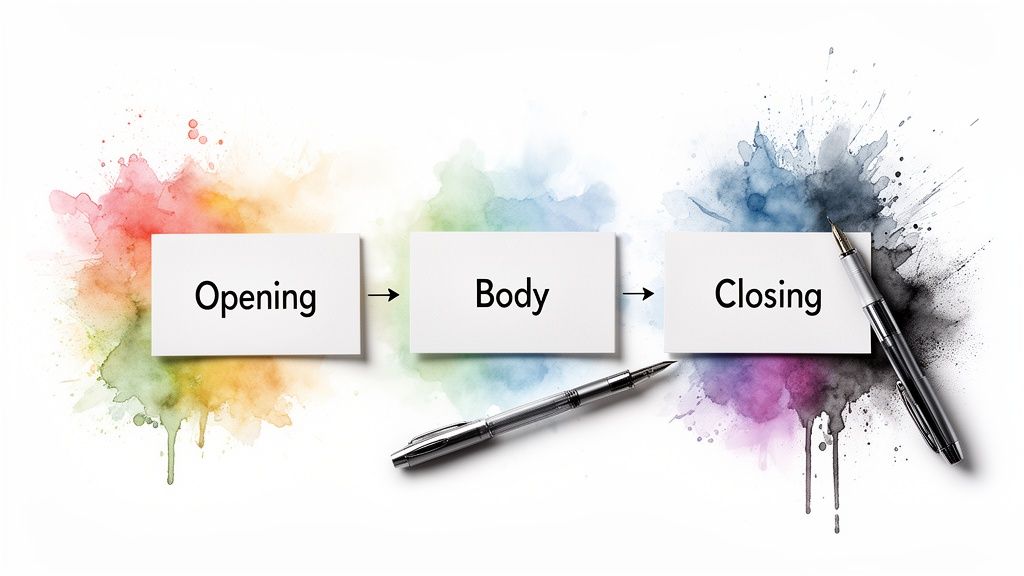
Instead of rambling, you’ll be guiding everyone on a short, engaging, and emotionally resonant journey. The secret? A classic three-part structure that has worked for speakers forever. This isn't about being rigid; it’s about creating a natural current that carries your stories and emotions from a strong start to a powerful finish.
Let's break down how you can build that perfect flow.
The Opening Hook
You have about 15 seconds to get the room's attention. That’s it. Your first words have to count, making everyone lean in, put down their forks, and listen. This opening, or "hook," sets the tone for everything that follows.
A great opening should do two simple things: introduce who you are and establish your connection to the couple. Please, skip tired lines like, "For those of you who don’t know me..." Try something warmer that immediately explains your place in the story.
Here are a few proven approaches that always work well:
- The Warm Welcome: Start by thanking the guests and expressing your joy. For example, "Good evening, everyone. Seeing so many loved faces here to celebrate my best friend and his amazing wife is truly something special."
- The Gentle Humor: A light, self-aware joke can break the ice instantly. A father of the bride might say, "I’m the man who’s been waiting years for this moment. Not just to give my daughter away, but to finally get her off the family phone plan."
- The Heartfelt Statement: Dive right into the emotion. A maid of honor could begin with, "I’ve known since we were kids that the person who married Sarah would have to be extraordinary. And then, she met you, James."
The Body: The Heart of Your Story
This is where all that brainstorming you did earlier pays off. The body of your speech is dedicated to the one or two key anecdotes you selected. Your job isn't to list every memory you have but to use a story to illustrate a central theme about the couple.
Are they adventurous travelers? Tell the story of their disastrous but hilarious first trip together. Are they incredibly loyal? Share the moment one of them dropped everything to support the other through a tough time. The story is the proof. This is how you deliver a speech that feels genuine—by showing, not just telling.
A great speech isn’t a biography; it's a snapshot. You're choosing one perfect picture from a whole album to show everyone what their love looks like up close.
The Close and The Toast
The final section brings it all home. Your closing should gracefully tie back to your opening or the main theme from your stories. Connect the memory you shared to this very moment, explaining how that quality you highlighted is exactly what will make their marriage so strong.
Finally, you’ll raise your glass. The toast should be concise, sincere, and forward-looking. Instead of a generic "to the happy couple," make it personal.
Try something like this: "So, let's all raise a glass to a lifetime of adventures, laughter, and unwavering support. To the newlyweds!"
A clear, three-act structure is the foundation of any memorable speech. This table breaks down how to allocate your time and focus for each section.
The Three-Part Speech Structure
| Section | Purpose | What to Include | Time Allotment (for a 4-min speech) |
|---|---|---|---|
| Opening | Grab attention and introduce yourself. | A warm welcome, a light joke, or a sincere statement about the couple. | 30-45 seconds |
| Body | Share a meaningful story. | One or two focused anecdotes that reveal a key quality about the couple. | 2-3 minutes |
| Closing | Tie it all together and toast. | Connect the story to the couple's future and end with a heartfelt toast. | 30-45 seconds |
Having a framework like this keeps you on track and ensures your message lands perfectly.
If you're struggling to connect these pieces, an assistant like Wedding AI can be a huge help. It can help organize your anecdotes into this three-part structure and suggest transitions to make the entire speech feel seamless.
Writing Words That Sound Like You
So you've got your stories picked out and a rough structure in mind. Now comes the real art: finding the words that actually sound like they came from you. The best speeches feel genuine and conversational, not like you downloaded a template five minutes before the reception.
The goal is to sound like the best, most articulate version of yourself, speaking from the heart.
My number one tip? Write for the ear, not the eye. As you write, read every single sentence out loud. If you trip over a phrase or it just sounds clunky and unnatural, rewrite it. If you wouldn't say it to a friend over coffee, it has no business being in your speech.
Avoiding the Cliché Trap
Wedding speeches are notorious minefields of clichés. We've all heard them a million times: "soulmates," "perfect match," "meant to be." These phrases have been used so often they've lost almost all their meaning.
Your job is to show, not just tell. Instead of relying on tired expressions, let your stories do the heavy lifting.
For example, don't just say they're a "perfect match." Paint a picture. You could say, "I knew they were perfect for each other when I saw David, who is terrified of heights, spend an entire afternoon on a Ferris wheel just because Sarah loves them. That’s not just love; that’s some serious dedication." See the difference?
Your personal stories are your greatest weapon against clichés. They provide the color, the personality, and the proof that makes a speech truly unforgettable.
Finding the Right Balance of Humor and Heart
A little humor goes a long way in warming up the room, but it has to have a point. A funny story should always circle back to a heartfelt message about the person you're celebrating. Remember, this is a wedding speech, not a Comedy Central roast.
Think of humor as the seasoning, not the main dish. For a best man, a quick jab about the groom’s questionable college fashion sense is fine, but only if it connects to how he’s grown or how his partner has elevated his style (and his life). The joke should always land with affection.
This balance also comes down to timing. One of the greatest gifts you can give the couple (and the other guests) is keeping your speech concise. While old-school wedding speeches could drag on, attention spans are shorter these days. Modern trend analysis shows that guest engagement plummets after seven minutes. That’s why the 3-to-5-minute speech is now the gold standard—it’s just enough time to be impactful without losing the room's energy. You can see more on how wedding dynamics are shifting in this 2026 wedding trend forecast.
If you’re staring at a blank page and just can’t seem to find that authentic voice, don't panic. A tool like Wedding AI can be an incredible co-writer. It kicks things off by asking smart questions to pull out your best memories, then generates a solid first draft. From there, you can tweak, polish, and inject your personality until it feels 100% yours. It's a fantastic way to beat writer's block and build a foundation you can truly own.
Rehearsing and Delivering Your Speech with Confidence
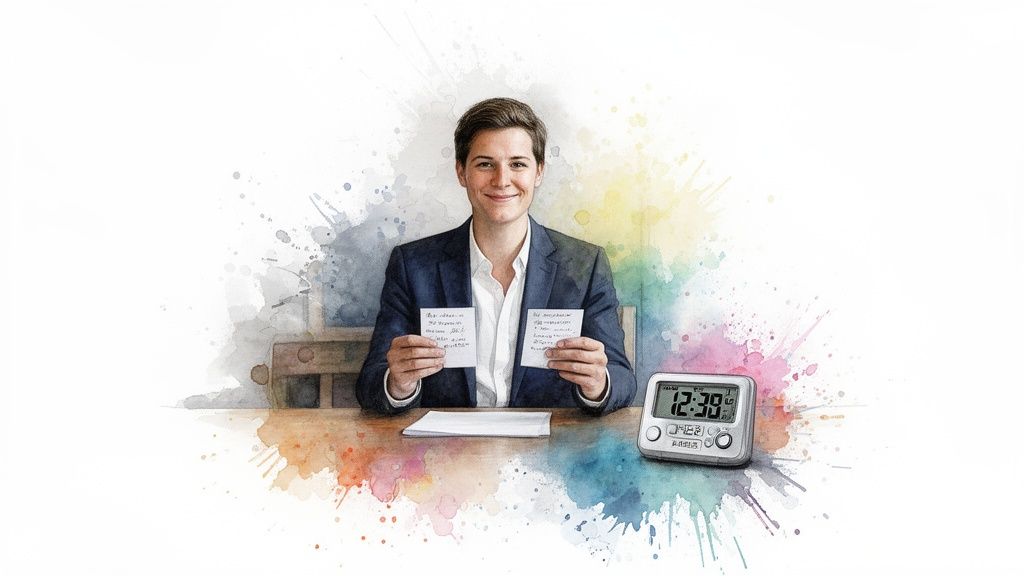
Getting the words on paper is a massive win, but the real magic comes alive in the delivery. If you’re feeling nervous, good. That’s totally normal, and it just means you care. The best way to channel that nervous energy into genuine confidence is through solid preparation.
Think of your written speech as a blueprint. How you say those words—your rhythm, your pauses, your sincerity—is what will actually connect with the couple and their guests. This final stage is all about turning those words on a page into a memorable, heartfelt moment.
Practice Creates Poise
You have to practice out loud. I can't stress this enough. Reading a speech in your head is a completely different experience from actually speaking it. It’s only when you say the words that you’ll hear where you stumble, catch which sentences are too clunky, and feel the natural rhythm of your story.
Find a private spot and just go for it. Better yet, record yourself on your phone. It might feel a little awkward, but listening back is the fastest way to find what works. You’ll instantly hear if you’re rushing the punchline of a joke or if you’re mumbling through an important part.
In the days before the wedding, aim to run through your speech at least five to ten times. The goal isn't to memorize it word-for-word. It's about getting so comfortable with the flow that you can deliver it from the heart instead of just reading it from a card.
Master Your Pacing and Timing
Timing is critical. You’re aiming for that 3-to-5-minute sweet spot—long enough to share something meaningful, but short enough to hold everyone’s attention. A speech that drags on is the quickest way to kill the energy in the room.
Use a timer during your rehearsals. Most people speak at about 130 words per minute, which means a four-minute speech clocks in right around 520 words. If you're consistently running long, it's time to make some tough cuts. Be ruthless. Trim any sentence that doesn’t serve a purpose and stick to the most powerful parts of your stories.
Slow. Down. When nerves kick in, we all have a tendency to speed up. Intentionally build pauses into your speech. Take a breath after a funny line to let the laughter ripple through the room, or pause right before a heartfelt thought to give it the weight it deserves.
Day-Of Delivery Tips
When it’s your turn to speak, just remember one thing: everyone in that room is rooting for you. They’re there to celebrate, and they genuinely want to hear what you have to say.
Here are a few final pointers to stick the landing:
- Use Notecards, Not a Sheet of Paper: Jot down your main points or opening lines on small notecards. This keeps you from burying your head in a full page and encourages you to look up and engage.
- Make Eye Contact: Scan the room and find a few friendly faces. Lock eyes for a few seconds with one person, then move to another. It makes the whole thing feel less like a performance and more like a conversation.
- Stand with Confidence: Plant your feet, stand up tall, and take a deep breath before you start. Good posture doesn't just look confident; it actually helps you project your voice.
- Embrace the Imperfection: If your voice cracks or you get a little emotional, that’s okay! It’s real. If you flub a word, just smile, take a beat, and carry on. Authenticity will always be more moving than a flawless, robotic delivery.
Answering Your Last-Minute Wedding Speech Questions
Alright, you've got your stories picked out and you've even practiced a few times in the mirror. But a few nagging questions might still be swirling around in your head. Let's tackle those last-minute details so you can walk up to that microphone with total confidence.
Think of this as the final polish on all your hard work.
What’s the Perfect Length for a Wedding Speech?
Everyone from the wedding planner to the guests will thank you for keeping it between 3 and 5 minutes. That’s the magic window. It gives you just enough time to tell a great story, share how you really feel, and raise a glass without seeing people start to shift in their seats.
So, what does that look like on paper? A four-minute speech, delivered at a nice, relaxed pace, usually lands somewhere between 500 and 600 words. But don't just trust the word count—the only way to know for sure is to pull out your phone's stopwatch and time yourself. Nailing the timing isn't just about being a good speaker; it's a sign of respect for the couple and the entire event schedule.
Should I Try to Be Funny?
A little humor can be absolutely brilliant, but you have to wield it carefully. The goal is a warm, collective chuckle from the room, not a cringe-worthy silence. You're giving a toast, not trying out for a Netflix special. The best approach is always gentle, inclusive humor that everyone from their college roommate to their grandma can appreciate.
If you're the best man or maid of honor, a funny memory about your friendship is a fantastic way to go. Just make sure you steer clear of these landmines:
- Inside jokes. If only three people in a room of 150 get it, you've lost everyone else.
- Seriously embarrassing stories. Mortifying the bride or groom is not the goal. Keep it light and loving.
- Any mention of exes. This is the number one, unbreakable rule. Don't do it. Ever.
Your humor should always, always be in service of celebrating the couple.
Is It Okay to Use Notes?
Yes, absolutely! In fact, I highly recommend it. Very few people are professional orators who can deliver 500 words from memory under pressure. Notes are your safety net, and there's no shame in using them. The trick is how you use them.
Your notes are there to guide you, not to be read like a script. The real magic happens when you connect with the people in the room, and you can't do that if you're staring down at a piece of paper.
My advice? Ditch the full-page printout. Instead, grab a few small notecards and jot down bullet points or key phrases. This forces you to look up, make eye contact, and speak more naturally. Practice using your notecards at home until glancing down for your next point feels quick and seamless.
What Are the Biggest Mistakes People Make?
Aside from having a little too much liquid courage before you get up there, a few common traps can derail an otherwise great speech. Knowing what not to do is just as important as knowing what to do.
Try your best to sidestep these classic blunders:
- Going on too long. This is, without a doubt, the #1 complaint from wedding guests.
- Making the speech about yourself. It's fine to tell a story that involves you, but the spotlight must always swing back to the couple.
- Relying on clichés. Don't just say they're "perfect for each other." Tell a short story that shows why.
- Forgetting the toast! Your whole speech builds up to this one moment. Don't forget to ask everyone to raise their glass.
If you're feeling overwhelmed trying to juggle all of this, a tool like Wedding AI can be a huge help. It helps you find the right words, organize your thoughts, and even practice your timing, making sure your speech is memorable for all the right reasons.
Crafting a wedding speech from scratch can be daunting, but Wedding AI turns your personal memories into a heartfelt, polished speech that sounds just like you. It's your secret weapon for delivering a toast with confidence and ease. Start creating your unforgettable speech today.


