
Writing your wedding vows is, at its heart, about telling your unique story. The simplest way to approach this is to think of your vows in three parts: look back at your past, celebrate your present, and make promises for your future. This simple structure is your key to turning a jumble of memories and feelings into heartfelt promises that sound exactly like you.
Your Guide to Unforgettable Wedding Vows
Welcome to what might just be the most meaningful part of planning your entire wedding. The thought of writing your own vows can feel massive, can't it? It’s like being asked to give the most important speech of your life while everyone you know and love looks on.
But I want you to reframe that. This isn't a performance; it's a profound opportunity to tell your partner, in your own words, exactly why you're standing there with them.
Forget the pressure to be a Shakespearean poet or a flawless public speaker. This is all about connection. Think of your vows as a heartfelt conversation you just happen to have prepared for. You’ve already done the hardest part: you found your person. Now, all you have to do is find the words.
More Than Just a Trend
If you've decided to write your own vows, you're in excellent company. This isn’t just a passing trend anymore; it represents a real shift in how couples approach their ceremonies.
In fact, recent wedding analyses show that personalizing the ceremony is a top priority. In major markets like the US, UK, and Australia, over 60% of couples are now writing their own vows. It’s a move away from simply reciting traditional lines and toward creating a moment that truly reflects your partnership. You can see more insights on this in modern wedding vow trends from Mrs. at Last.
Setting the Right Tone
Before you put pen to paper, take a moment with me to think about the tone. This one decision will guide every word you choose. Do you want your vows to be:
Deeply Romantic? You can focus on the depth of your emotions, the dreams you've built together, and the significance of this commitment.
Lighthearted and Funny? Maybe your relationship is built on laughter and inside jokes. If you don't take life too seriously, your vows can reflect that.
A Balanced Blend? This is often the sweet spot. A mix of humor and heart feels incredibly genuine and keeps everyone engaged—much like a killer best man speech that gets both laughs and tears.
The goal here is authenticity. The most memorable vows are the ones that sound exactly like the two people standing up there.
The most powerful vows aren't for your guests; they are for your partner. While your friends and family are there to witness, the promises you make are a private covenant shared publicly. Focus on speaking directly to the person in front of you.
Your vows are the emotional core of your wedding day. These are the words that will stick with you long after the last song plays. This guide is here to walk you through it, helping you find words that are not only beautiful but also deeply and truly you. And if you hit a wall, a tool like Wedding AI can be a fantastic brainstorming partner, asking smart questions to help you unearth those perfect personal stories.
The Four Pillars of Memorable Vows
To make sure your vows feel complete and hit all the right notes, it helps to think about four key components. Including a bit of each creates a message that's balanced, personal, and incredibly impactful.
| Pillar | What It Is | Why It Matters |
|---|---|---|
| The Story | A specific memory or anecdote about your past. The "how we got here." | It grounds your love in reality, showing your guests (and reminding your partner) a genuine moment that defines your relationship. |
| The Affirmation | What you love and admire about your partner right now. | It's a celebration of the person they are today, making them feel seen and cherished in the present moment. |
| The Promises | Your specific, personal commitments for the future. | These are the heart of your vows—the actionable pledges that will guide your marriage long after the wedding day. |
| The Vision | A shared hope or dream for your life together. | It ends your vows on a hopeful, forward-looking note, painting a picture of the beautiful future you'll build as a team. |
Thinking in terms of these four pillars can turn a daunting task into a simple, creative exercise. It gives you a roadmap, ensuring your vows tell the full, beautiful story of your love—past, present, and future.
Finding Your Story Through Reflection

Before a single word hits the page, the most important part of this whole process is to just… stop. Take a breath and think. This is where you’ll find the raw, authentic material for your vows—the real stories, quirks, and feelings that will make your partner’s heart soar.
Forget about finding the perfect phrase for now. Your only job is to collect honest-to-goodness moments. Think of it like a maid of honor sifting through years of memories to find that one perfect story for her toast; you're doing the same, but for the moments that define your love.
Asking the Right Questions
Generic prompts often lead to pretty generic vows. To get to the good stuff, you need to dig a little deeper with questions that trigger specific, sensory memories. The goal here is to unearth little anecdotes that show your love story instead of just telling it.
Find some quiet time, grab a notebook or open a doc, and just let your mind drift with these prompts. Don't edit or censor yourself—just jot down whatever pops into your head.
Describe a time they had your back when no one else did. What did that feel like in your chest?
What’s a tiny, everyday thing they do that makes you feel completely seen and loved?
Think about a moment you were so proud of them you thought you might burst. What were they doing?
When was the last time you laughed until you cried together? What was so ridiculously funny?
Remember a challenge you had to tackle as a team. How did getting through it change your relationship for the better?
This simple act of remembering is the secret sauce. It’s how you write wedding vows that feel earned and true. You’ll be amazed at the rich details that bubble up when you just give them a little space.
Your vows are spoken to your partner, but they’re witnessed by your community. The best stories are those that feel deeply personal yet are universally understood—a specific story about your partner's kindness will resonate with every single person there, even if they don't know all the details.
From Memories to Themes
Once you have a list of memories, read back through your notes. You’ll probably start to see some patterns. Maybe several stories circle back to their unwavering support, or perhaps their goofy sense of humor is a thread running through everything.
These recurring ideas are the themes of your relationship.
These themes become the pillars holding up your vows. They give you a focus and help you organize all those scattered thoughts into a cohesive story. You might spot themes of adventure, partnership, comfort, or growth. Just picking out two or three of these gives you a powerful foundation to build on.
This brainstorming phase is, without a doubt, the most important step. If you're feeling stuck, this is a great time to lean on a tool like Wedding AI. It can offer a guided experience, asking targeted questions that help pull out those core memories and sort them into themes, making the jump to actual writing feel so much easier.
This collection of stories and themes is the gold you’re about to spin into beautiful, heartfelt vows.
Structuring Vows That Tell Your Story
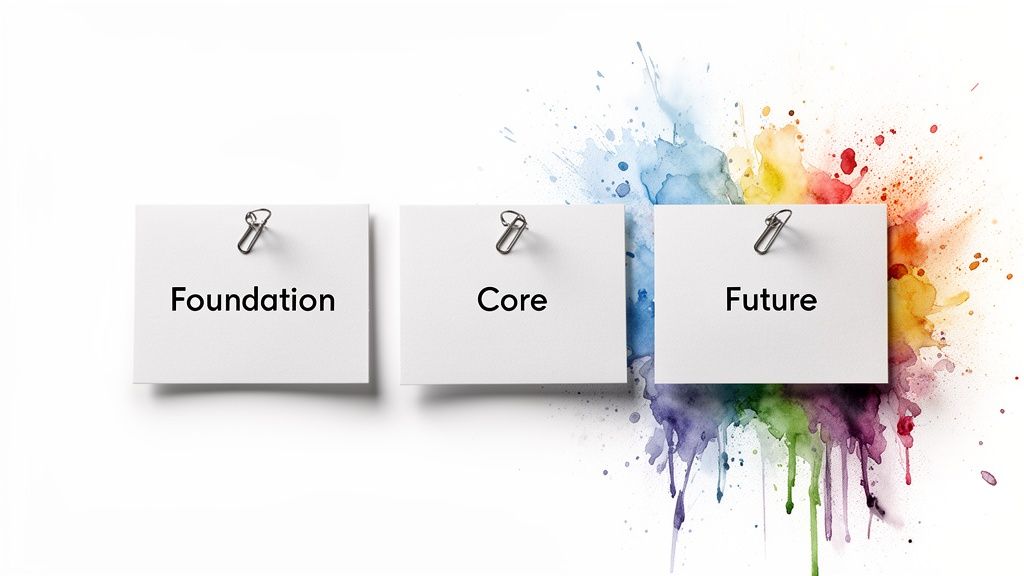
So you've got all these incredible memories and feelings jotted down. Now what? The secret to vows that flow beautifully and keep everyone captivated isn't magic—it's a clear structure.
Instead of staring at that blinking cursor, you can lean on a timeless narrative arc that storytellers have used for centuries. This simple framework takes the pressure off, letting you organize your thoughts and build emotion naturally from one point to the next.
Since the 1970s, more and more couples have opted to write their own vows, and it's easy to see why. But without a bit of structure, even the most heartfelt vows can meander and lose their impact. You can read more about the history of personalizing wedding vows on IFStudies.org. That’s where this simple, three-part structure comes in to save the day.
The Foundation: Your Past
This is where your love story begins. Kick things off by looking back and grounding your vows in a real, shared memory. Don't try to cram your entire relationship timeline in here. Just pick one specific moment that perfectly illustrates the foundation of your love.
Think back to the stories you uncovered earlier. Was it the instant you knew they were different? Or a time they showed up for you in a way nobody else ever had?
Try starting with: “I’ll never forget the first time…”
Or maybe: “When I think back to how we started, what stands out most is…”
This kind of opening immediately pulls your partner and your guests into your world. It works for the same reason a father of the bride’s speech does when he starts with a cherished childhood memory—it creates an instant emotional connection and sets the stage for everything else.
Your story doesn't have to be some grand, cinematic moment. Often, the most powerful foundations are built on small, quiet memories that reveal a profound truth about your connection.
The Core: Your Present
With the foundation laid, it’s time to shift into the present. This part of your vows is all about affirming your partner for the person they are right now. What do you love and admire about them today?
Focus on their qualities and the real impact they have on your life. Are they kind, hilarious, resilient, or adventurous? The key is to show, not just tell. Don't just list adjectives; bring them to life with tiny examples.
Instead of: “You are so supportive.”
Try: “I love how you always know the right thing to say, whether I’m celebrating a huge win or just need to vent about a bad day.”
This section is a celebration of the person standing right in front of you. It's also the perfect spot to sprinkle in a little humor that feels authentic to your relationship.
The Future: Your Promises
Finally, you’ve arrived at the heart of your vows: the promises. This is where you look forward and make your commitments for the future you’re about to build together.
These promises should be deeply personal and specific to your relationship. Go beyond the traditional “in sickness and in health.” What unique promises can you make that only you could give?
“I promise to always be your biggest cheerleader, even when you doubt yourself.”
“I promise to keep our life full of adventure, even if it’s just turning a Tuesday night into a dance party in the kitchen.”
This is your chance to declare your intentions and give your partner a real sense of security and excitement for the journey ahead. It’s the powerful conclusion that transforms your heartfelt story into a binding commitment.
Writing Words That Sound Like You
Alright, you've brainstormed your favorite memories and you have a rough structure. Now for the fun part: turning those bullet points and feelings into words that actually sound like you.
This is where your unique voice comes in. The goal isn't to suddenly become a poet or a stuffy orator. It's to sound like yourself on your very best day—clear, genuine, and speaking straight from the heart.
Think about the overall vibe of your relationship. If you two are constantly laughing, don't be afraid to weave in a little humor. A well-placed funny line can feel just as heartfelt as a romantic one. Think of it like a best man’s toast; the funny stories are what make the sincere moments land with so much more impact. Just aim for balance, ensuring the core of your vows remains sincere.
Nailing the Opening Line
Your first sentence sets the stage. It's your chance to grab your partner's attention (and everyone else's) right from the start. Try to sidestep clichés and go for something that feels truly yours.
You could kick things off with a feeling, a specific moment, or just a simple, direct address that feels incredibly intimate.
A heartfelt start: "I've been trying to find the perfect words to tell you what you mean to me, and I think I'm finally getting close."
A playful opening: "Everyone said I’d just know when I found 'the one.' They just forgot to mention I'd also find the person who steals all the blankets."
A direct address: "My love, being here with you right now feels like I've finally come home."
A great opening makes your partner lean in, eager to hear the rest of the story you’re about to tell.
Making Promises That Matter
This is the heart of your vows. Your promises need to feel both meaningful and real. So, let’s move beyond the generic. Think about how you'll show your love in your day-to-day life. What are the small, everyday actions that build a life together?
Vows are a public declaration of a private commitment. While your guests are witnesses, your words are a direct line to your partner's heart. Focus on speaking to them, and the authenticity will resonate with everyone.
Try phrasing your promises in a way that captures your unique dynamic. Specificity is your best friend here.
Instead of: "I promise to support you."
Try: "I promise to be the one you can always count on—for a pep talk, a reality check, or just a quiet moment to breathe together when life gets loud."
See the difference? That level of detail makes your promises feel tangible and deeply personal.
Side-Stepping Common Traps
As you write, a few common pitfalls can trip you up. Super personal inside jokes, for example, can sometimes leave your guests feeling like they're on the outside looking in. A good rule of thumb: if a story needs more than a quick sentence of backstory to make sense, maybe save it for a private letter.
The pressure to write "perfect" vows can be intense. Recent data shows that 1 in 4 couples now use technology to help with wedding tasks, and vow-writing is a big one. You can learn more about AI's role in modern weddings from The Knot. While a tool can be a great way to get some ideas flowing, remember that the most powerful words will always come from you. The goal is polished, not robotic.
Refining and Rehearsing Your Vows

You did it. You poured your heart onto the page, and the hardest part is officially behind you. But before you call it done, there’s one final, crucial step: making sure the words you wrote sound just as good when you say them out loud. This is where you polish a great draft into an unforgettable moment.
Think about it like a best man practicing his toast. He reads it aloud not to memorize it word-for-word, but to find its natural rhythm, catch any clunky phrases, and make sure he’s not rambling on for ten minutes. That's exactly what you need to do now.
Polishing Your Words
First things first: read your vows out loud. It’s amazing how words that look perfect on a screen can feel totally awkward or unnatural when spoken. As you read, just listen to how everything flows.
Catch the stumbling blocks: Are there any tongue-twisters or long, winding sentences that leave you gasping for air? If you trip over a phrase, it’s a clear sign it needs to be simplified.
Check the clock: Pull out your phone and time yourself. The sweet spot for wedding vows is between two and three minutes. That’s long enough to be meaningful but short enough to keep everyone captivated.
Get a second opinion: Ask a close friend—someone who really gets you and your partner—to listen. They can give you honest feedback on the tone, the pacing, and the emotional punch.
Rehearsal isn’t about some flawless, Oscar-worthy performance. It’s about getting so comfortable with your words that you can deliver them with real emotion, making eye contact with your partner instead of being glued to a piece of paper.
Practicing for the Moment
Once the words themselves feel right, it’s time to practice your delivery. Standing up there in front of everyone you love, feeling a tidal wave of emotions… it’s a lot. A little preparation goes a long way in helping you feel grounded and actually present in that moment.
If you’re stuck on a particular section or just want to double-check that your tone is hitting the right notes, an AI writing assistant like Wedding AI can be a surprisingly helpful final sounding board. It can help analyze your pacing and smooth out any last-minute rough edges.
Remember, your goal isn’t perfect memorization, it’s familiarity. You want to know your vows well enough that you can look up from your notes, connect with your partner, and let the words flow from a place of deep, genuine love. This is the final step that ensures your beautifully written promises are delivered with all the heart that inspired them.
Answering Your Lingering Vow Questions
Even with a solid plan, a few last-minute questions always seem to pop up. Let's tackle those nagging little details so you can walk down the aisle feeling totally confident and ready.
How Long Should My Vows Be?
Aim for the sweet spot: somewhere between two and three minutes. Spoken at a natural, meaningful pace, that usually works out to around 300-400 words.
But honestly, the exact word count isn't the most important thing. The real goal is to coordinate with your partner so your vows feel balanced. You don't want one person giving a short, sweet toast while the other reads a ten-minute epic. Just agree on a general timeframe beforehand, and you'll be golden.
Should We Read Each Other's Vows Before the Wedding?
This is totally up to you, but most couples love the magic of a complete surprise. There's something incredibly powerful about hearing those words for the very first time at the altar—it creates a moment of pure, unfiltered emotion that you just can't script.
Of course, you can still get on the same page without spoiling the surprise. Here's a practical tip:
Share your structure: "I'm starting with a quick story, then I'll share what I love about you, and I'll finish with three promises."
Align on the tone: "Let's go for mostly sentimental, but maybe with one funny memory in the middle."
Confirm the length: A simple "Hey, are you still aiming for about two minutes?" is all you need.
This way, you get the best of both worlds—a cohesive ceremony and a genuine, heartfelt surprise.
What Are the Biggest Vow-Writing Mistakes?
Most mistakes come from a good place. A big one is packing your vows with too many inside jokes. One quick, charming reference is great, but a whole string of them can make your guests feel like they're on the outside of a conversation they can't understand.
Another common slip-up is making promises you can't possibly keep. Vowing "I'll never be grumpy in the morning" is a nice thought, but it's not realistic. Instead, frame your promises in reality: "I promise to always bring you coffee, especially when you're grumpy in the morning."
The number one mistake? Telling instead of showing. Don't just say, "you're my soulmate" or "you are so kind." Prove it with a tiny story. "I knew you were the kindest person I'd ever met the day you spent an hour in the pouring rain helping a stranger change their tire."
Is It Okay to Be Funny in My Vows?
Absolutely! If laughter is a huge part of your relationship, it should be a part of your vows. A well-placed, lighthearted line can make the moment feel so much more personal and true to who you are as a couple.
The key is to strike the right balance. Humor lands best when it's wrapped in sincerity. Think of a great best man speech—the funny stories work because they highlight a deep, genuine affection. A good rule of thumb is to start and end on a heartfelt note, with a little humor sprinkled in the middle.
Just make sure the jokes are loving and celebratory. This is your chance to lift your partner up, not gently roast them. Keep it warm, keep it kind, and it'll be perfect.
Feeling stuck or just need a creative partner to help you find the right words? The guided prompts from Wedding AI can help you unearth your best stories and organize them into vows that sound exactly like you. Craft your perfect vows today.


