The moment you’re asked to give a wedding speech is an incredible honor, quickly followed by a wave of panic. It’s a completely normal feeling. You want to be funny but not inappropriate, heartfelt but not overly sentimental, and memorable for all the right reasons. You’re not just giving a speech; you’re capturing a lifetime of friendship, love, or pride in about five minutes. It can feel like an impossible task, but you can absolutely do it.
The secret isn't about being a professional writer or a stand-up comedian. It's about having a clear, actionable plan. Think of this guide as advice from a trusted friend who has seen it all: the good, the bad, and the speeches that are still talked about years later. We're going to move beyond generic advice and provide specific, practical wedding speech tips you can use immediately.
Whether you're the best man aiming for laughs, the maid of honor wanting to share a tear-jerking memory, or a parent expressing a lifetime of love, these ten strategies will help you craft and deliver a toast that feels authentically you. We will cover everything from structuring your thoughts and finding the perfect stories to balancing humor with heart and delivering your words with genuine confidence. Let’s transform that blank page into a standing ovation.
1. Start with a Strong Hook or Personal Story
The first 30 seconds of your speech are the most critical. Instead of opening with a generic line like, "For those who don't know me, I'm…," you can captivate everyone from the very first word. A strong hook, typically a brief and compelling personal story, immediately grabs the audience’s attention and sets the stage for a truly memorable toast.
This is one of the most effective wedding speech tips because it makes your message feel personal, not scripted. Whether you're a best man aiming for a laugh or a maid of honor seeking a heartfelt moment, this approach ensures your speech stands out from the very beginning.
Why It Works
A great opening story grounds your speech in a real, relatable moment. It shows the audience your unique connection to the person you're honoring, rather than just telling them about it. This builds instant credibility and makes everyone lean in, eager to hear what you have to say next.
How to Implement This Tip
Your hook doesn't need to be a dramatic life story; it just needs to be specific and revealing. The key is to find a small moment that says something big about the person's character or your relationship with them.
- For a Humorous Opening (Best Man/Friend): Start with a surprising or funny moment. Example: "The first time I met Dave, he was trying to convince a campus security guard that his car hadn't been towed, it had simply been ‘borrowed by a ghost.’ That’s when I knew he was the most creative, and persistent, friend I’d ever have."
- For a Heartfelt Opening (Maid of Honor/Parent): Begin with a moment that reveals their character. Example: "I knew Sarah was going to be my best friend in the third grade, the day she gave me her entire bag of Skittles after I’d had a bad day. She’s been sharing her sweetness with the world ever since."
Quick Tip: Your opening story should be a self-contained snapshot, lasting no more than 45-60 seconds. Its purpose is to set the scene before you transition into the main body of your speech.
To find your perfect hook, ask yourself: what single memory best illustrates who this person is to me? You can also explore role-specific prompts within a tool like Wedding AI to help brainstorm impactful personal memories that will resonate with the audience.
2. Know Your Audience and Tailor Your Tone
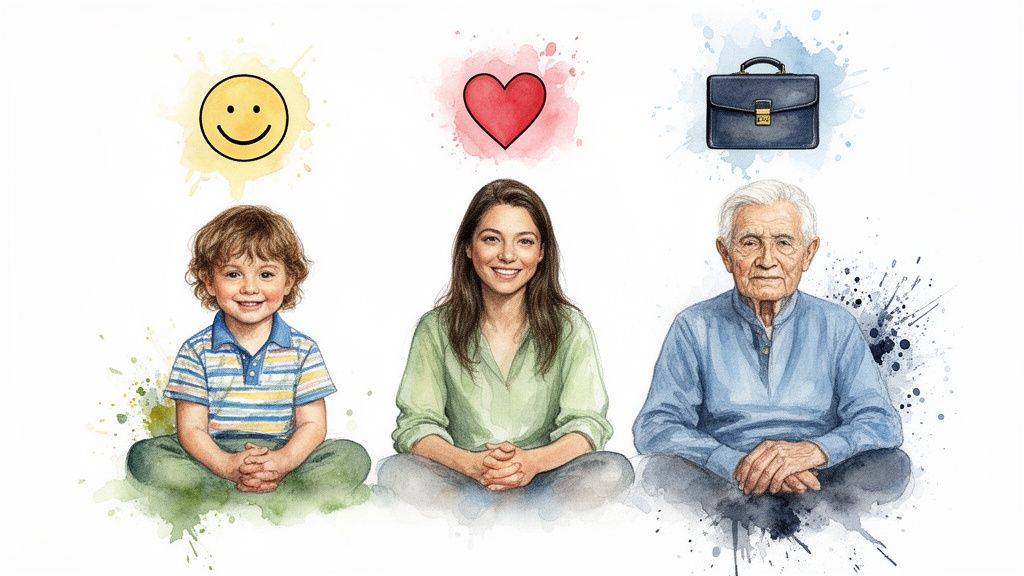
A brilliant speech is one that resonates with everyone in the room, from the couple’s childhood friends to their great-aunt Mildred. The key to achieving this is understanding your audience and adjusting your tone accordingly. This means considering the mix of ages, backgrounds, and relationships present, ensuring your jokes land well and your heartfelt moments connect universally.
This is one of the most crucial wedding speech tips because it prevents awkward moments and makes everyone feel included in the celebration. A well-tailored speech demonstrates thoughtfulness and respect, making your message more powerful and memorable.
Why It Works
When you tailor your tone, you bridge the gap between different groups of guests. A story that might delight college friends could confuse older relatives if it lacks context. By finding a common ground, you ensure your humor is appreciated, your sentiments are understood, and your tribute to the couple feels inclusive and complete.
How to Implement This Tip
Before you write a single word, think about the guests. A little forethought can help you craft a speech that is both personal to the couple and accessible to everyone celebrating them.
- For a Diverse Crowd (Best Man/Maid of Honor): If the guest list includes the couple's corporate colleagues and their conservative family, balance your stories. You can share a lighthearted, office-appropriate anecdote and follow it with a sweet, family-friendly memory. Avoid inside jokes that only a handful of people will understand.
- For a Sensitive Situation (Parent/Sibling): Be mindful of the context. If you know there are guests in recovery, it’s wise to avoid centering your speech on wild, alcohol-fueled stories. Instead, focus on anecdotes that highlight the person's character, kindness, or sense of adventure in a different setting.
Quick Tip: Before you start writing, list 3-4 key audience groups (e.g., family elders, work friends, college buddies, young cousins). Aim to include at least one line or a short story that will resonate with each of them.
If you’re unsure about the tone, running your draft through a smart tool can help. For instance, Wedding AI can suggest edits to make your speech more "family-friendly" or adjust its formality, ensuring it’s perfectly tuned for the occasion.
3. Use the Rule of Three for Memorable Structure
The Rule of Three is a classic storytelling principle stating that ideas presented in groups of three are more satisfying, humorous, and memorable. Applying this powerful structural technique to your speech organizes your thoughts into a clear, rhythmic pattern that sticks with your audience.
This is one of the most effective wedding speech tips because it gives you an instant framework. Instead of a rambling collection of memories, your speech becomes a well-organized tribute built on three main points, making your message feel complete and impactful.
Why It Works
Our brains are naturally wired to recognize patterns, and three is the smallest number needed to create one. This structure provides a sense of beginning, middle, and end that feels balanced and complete. It makes your content easier for the audience to follow, process, and remember.
How to Implement This Tip
Think of the Rule of Three as your speech-writing blueprint. Before you write, decide on the three core pillars of your message. This approach works for any role, from a father of the bride sharing heartfelt wisdom to a best man delivering a hilarious toast.
- To Illustrate Character: Describe three key qualities. Example: "Anyone who knows Mark knows he is three things: fiercely loyal, endlessly optimistic, and an absolutely terrible karaoke singer."
- To Structure Your Narrative: Use three distinct stories from different eras. Example: Share a funny memory from childhood, a meaningful one from your college years, and a recent one that shows how they've grown.
- To Praise the Couple: Explain three reasons they are perfect for each other. Example: "They're a perfect match because they share the same sense of adventure, they balance each other’s quirks, and most importantly, they both think pineapple belongs on pizza."
Quick Tip: For maximum impact, structure your trio like this: the first item is relatable, the second is a bit more specific or surprising, and the third delivers the emotional or humorous payoff.
To find your perfect trio of stories, you can ask a tool like Wedding AI to generate three distinct anecdotes from different periods of your relationship, ensuring each one showcases a unique facet of the person you are honoring.
4. Balance Humor with Heartfelt Moments
The most memorable wedding speeches create an emotional journey, weaving together genuine humor and authentic emotion. This balance keeps the audience engaged while honoring the significance of the occasion. Too much humor can feel like a roast, while too much sentiment can feel overly heavy. The sweet spot is a speech that makes people laugh, then brings a tear to their eye for all the right reasons.
This approach is one of the most powerful wedding speech tips because it mirrors real relationships, which are full of both laughter and deep affection. By blending these two elements, your toast will feel dynamic, authentic, and truly representative of your bond.

Why It Works
A speech that balances humor and heart prevents emotional fatigue. The laughter provides moments of levity and connection, making the audience more receptive to the sincere, heartfelt moments that follow. This emotional arc makes your final toast to the couple feel earned and deeply impactful.
How to Implement This Tip
Aim for a ratio of roughly 60% humor to 40% heart, or an even 50/50 split, depending on your personality and relationship. The key is to make the transitions feel natural, not abrupt.
- Funny Story to Sincere Insight: Share a lighthearted, embarrassing story, then connect it to a positive quality. Example: "I remember when Chloe tried to bake a cake from scratch and ended up setting off the fire alarm... twice. But that’s Chloe: she dives into everything with so much passion, even when it gets a little messy. And today, I see her diving into this marriage with that same incredible heart."
- Roast to Genuine Praise: Gently tease one of the newlyweds, then immediately highlight how their partner brings out the best in them. Example: "We all know Mark can be a little... directionally challenged. But since he met Emily, it’s clear he’s found his true north. You ground him and guide him in the most beautiful way."
Quick Tip: Always end on a heartfelt note. Your final words should be sincere and focused on the couple's future happiness. Let the genuine emotion be the last thing the audience remembers.
To perfect this balance, try writing out the humorous and emotional beats separately. You can then weave them together, ensuring each transition feels smooth. If you’re struggling to find the right blend, a tool like Wedding AI can help you adjust the tone, either by making sections funnier or adding emotional depth.
5. Avoid Clichés and Overused Wedding Speech Phrases
Wedding speeches often rely on familiar phrases like “a match made in heaven” or “my other half.” While these sentiments are sweet, they are also predictable. Audiences have heard them countless times, which can make your heartfelt message feel generic and forgettable. To deliver a truly memorable toast, you should aim for originality and authenticity.
This is one of the most impactful wedding speech tips because it forces you to dig deeper. By replacing clichés with specific, personal details, you demonstrate genuine thought and create a message that is uniquely tailored to the couple. Your words will resonate more profoundly because they are yours alone.
Why It Works
Original language grabs an audience's attention and makes them listen more closely. When you avoid clichés, you show that you put real effort into your speech, honoring the couple with fresh perspective rather than borrowed platitudes. This authenticity makes your toast feel more sincere and leaves a lasting impression.
How to Implement This Tip
The goal is to translate a common feeling into a specific, personal observation. Instead of using a shortcut phrase, describe the evidence you’ve seen of that feeling in the couple’s relationship.
- Instead of "Two halves make a whole," try describing their synergy: "It's incredible to watch how they operate as a team. He brings a calm focus that helps her channel her amazing creative energy, and she inspires him to take leaps he never would have taken alone."
- Instead of "It was love at first sight," describe the actual moment: "From the moment he saw her laugh at that dinner party six years ago, you could see a switch flip. It wasn't just attraction; it was recognition. He knew he'd found someone special."
Quick Tip: Before you finalize your draft, read it aloud and ask yourself, "Could this sentence be said about any couple?" If the answer is yes, challenge yourself to rephrase it with a detail that applies only to them.
To make this process easier, you can run your speech through a tool like Wedding AI, which includes a cliché detector to automatically flag overused phrases and suggest more original alternatives. This ensures your speech is as unique as the couple you're celebrating.
6. Practice Delivery and Master Pacing
Even the most brilliantly written speech can fall flat with poor delivery, while a good speech becomes great with confidence and rhythm. Mastering your pacing means knowing when to pause for effect, varying your speed to keep the audience engaged, and controlling the overall flow so your toast feels neither rushed nor slow.
This is one of the most crucial wedding speech tips because it transforms your words from text on a page into a genuine, living performance. Rehearsing your speech aloud is the non-negotiable step that builds the muscle memory and confidence needed to connect with everyone in the room.
Why It Works
Confident, well-paced delivery makes you appear comfortable and authentic, which helps the audience relax and truly listen to your message. When you control the rhythm of your speech, you guide the emotional journey of your listeners, ensuring jokes land perfectly and heartfelt moments sink in.
How to Implement This Tip
True confidence comes from preparation, not from simply reading your speech in your head. The goal is to become so familiar with the material that you can deliver it with genuine feeling, making eye contact and connecting with the happy couple and their guests.
- For Humorous Moments (Best Man/Friend): Pacing is everything for comedy. Example: A best man pauses for just a beat after a joke's setup ("John’s one real talent is his cooking…"), letting the anticipation build before delivering the punchline ("...he makes a truly unforgettable bowl of cereal"). The pause is where the laugh happens.
- For Sincere Moments (Maid of Honor/Parent): Slow your pace to add weight and emotion. Example: A maid of honor slows down and lowers her voice slightly when saying, "And seeing you with Sarah… it’s clear that you have found your perfect home in each other." This deliberate speed emphasizes the sincerity of the statement.
Quick Tip: Record yourself giving the speech on your phone and listen back. You’ll immediately notice where you rush, stumble, or sound monotonous. Aim to practice out loud at least 5-10 times before the wedding day.
To ensure your timing is perfect, you can use a tool like Wedding AI to generate a speech that fits the ideal 3-5 minute window, then practice delivering it at a natural, conversational speed. Remember, a 4-minute speech read too quickly becomes a rushed 3-minute one.
7. Tell Stories That Reveal Character, Not Just Funny Moments
The most impactful wedding speeches move beyond a simple collection of funny moments. Instead, they use specific anecdotes to reveal essential truths about the person you're honoring and their relationship. Strategic storytelling chooses narratives that illuminate why the couple is perfect together or highlight your genuine connection.
This is one of the most powerful wedding speech tips because it builds an emotional case for the couple's commitment. A well-chosen story doesn’t just get a laugh; it demonstrates their kindness, loyalty, or resilience, leaving a lasting impression on every guest in the room.
Why It Works
Funny stories are great, but stories with meaning are unforgettable. When you share an anecdote that reveals someone's core character, you give the audience a deeper understanding of who they are and why they are so loved. It transforms your speech from a performance into a heartfelt testament.
How to Implement This Tip
Instead of just recounting a wild night out, think about what a particular memory says about the person. Look for stories that have a "point" and connect that point back to their new marriage.
- For a Best Man/Friend: Instead of the typical party story, tell one that shows his loyalty. Example: "I remember when my car broke down two hours from home. Before I could even figure out a plan, Mike was already in his car, driving to come get me, no questions asked. That’s the kind of steadfast, loyal man he is, and I know he'll bring that same dedication to his marriage."
- For a Maid of Honor/Parent: Share a moment that illustrates their compassion or strength. Example: "When our family went through a difficult time, it was Sarah who held us all together. Her quiet strength and endless empathy were our foundation. Seeing her find a partner who values and protects that incredible heart is all I could have ever hoped for."
Quick Tip: Before you include a story, ask yourself: “What does this anecdote reveal about this person’s character, and how does that quality make them a great partner?”
To uncover these meaningful moments, think about times of challenge, growth, or quiet kindness. You can also use a tool like Wedding AI to explore prompts designed to surface stories that reveal character, ensuring your speech has both humor and heart.
8. Include a Strong, Memorable Toast or Closing Statement
The final 30 seconds of your speech are what everyone remembers most. Instead of letting your words trail off, you can end with a powerful, heartfelt toast that brings everything together. A strong closing statement ties up your speech's main themes and creates a clear, celebratory moment for everyone to raise their glasses.
This is one of the most crucial wedding speech tips because the toast is the grand finale. It’s the call to action for the audience, transforming your personal tribute into a shared celebration. Whether you are the father of the bride or a best friend, a well-crafted toast ensures your speech ends on a high note.
Why It Works
A memorable closing gives your speech a sense of purpose and finality. It summarizes the core emotion of your message and focuses all that energy into a single, beautiful wish for the couple’s future. It provides a natural cue for applause and leaves a lasting positive impression.
How to Implement This Tip
Your toast should be concise, specific, and emotionally resonant. Give this final moment the attention it deserves by drafting it separately from the main body of your speech.
- For a Heartfelt Closing (Maid of Honor/Parent): Focus on a sincere wish for their future. Example: "Here's to finding that one person who makes you want to be better, who believes in you when you doubt yourself, and who simply feels like home. To Sarah and Tom, you are that for each other. Cheers!"
- For a Meaningful Closing (Best Man/Friend): Tie it back to a theme from your speech. Example: "So let’s raise a glass to Mark and Emily. May you always keep laughing at each other’s terrible jokes, supporting each other's wildest dreams, and never losing that feeling of coming home that you have right here. To the happy couple!"
Quick Tip: Your toast should be just two or three sentences long. Practice saying it with genuine emotion while making eye contact with the couple, and end with a clear “Cheers!” or “To the couple!” so everyone knows it’s time to drink.
To polish your finale, you can use a tool like Wedding AI to refine your closing lines. Prompts like "Make this more heartfelt" can help you transform a good toast into an unforgettable one.
9. Know Your Role and Create Emotional Connection Through Vulnerability
Your specific relationship to the bride or groom is your superpower. Whether you're a best man, parent, or sibling, your unique perspective is what makes your speech special. Leaning into your role and allowing yourself to be vulnerable is one of the most powerful wedding speech tips for creating an authentic, heartfelt connection with everyone in the room.
Sharing a genuine, unpolished emotion, like a moment of pride that makes your voice catch, is far more memorable than a perfectly recited but emotionally distant speech. It invites the audience to feel the moment with you, transforming your toast from a performance into a shared experience.
Why It Works
Authenticity is magnetic. When an audience sees you expressing a real feeling, they feel a deeper connection to you and the couple. A father's proud reflection or a maid of honor's heartfelt wish for her friend’s happiness creates moments that resonate long after the applause fades.
How to Implement This Tip
Embracing your role means telling stories only you can tell and expressing emotions that are uniquely yours. The key is to be honest without being overly dramatic.
- For a Parent: Lean into nostalgia and pride. Example: "Watching you grow up, I always hoped you’d find someone who saw the incredible light in you. Today, seeing you together, my heart is just so full. I am incredibly proud of the person you've become."
- For a Sibling: Combine humor with sincere affection. Example: "We may have fought over the remote control for 15 years, but I’ve never fought for anyone harder than I have for my sister. Seeing you this happy is genuinely one of the best moments of my life."
- For a Best Man/Maid of Honor: Acknowledge the depth of your friendship. Example: "I’ll admit, I was nervous about who you’d marry, because no one seemed good enough for my best friend. But then I met Alex, and I knew my friend was in the best possible hands."
Quick Tip: Don't be afraid to pause if you get emotional. Taking a moment to collect yourself is a powerful, humanizing gesture that makes your words feel even more sincere. Don't rush through it.
To find your unique angle, consider what your relationship grants you exclusive access to. A tool like Wedding AI can help you explore themes and stories specific to your role, ensuring your speech highlights the connection that only you and the couple share.
10. Edit for Clarity, Brevity, and Impact
Your first draft is about getting ideas onto paper; your final draft is about making those ideas land with power. The editing process is where a good speech becomes a great one. It involves cutting unnecessary words, clarifying confusing points, and ensuring every single sentence serves a clear purpose.
This is one of the most crucial wedding speech tips because it respects the audience's time and attention. A tight, focused speech is always more memorable than a long, rambling one. Whether you are the father of the bride or a close friend, sharp editing ensures your message is delivered with maximum impact.
Why It Works
Strategic editing removes the fluff that dilutes your core message. When you trim a long anecdote or cut a weak joke, you create space for the truly powerful moments to shine. This discipline makes your storytelling more compelling and your emotional beats more resonant.
How to Implement This Tip
Treat your first draft as raw material. The goal of editing is to refine that material until it's polished and impactful. You should aim to cut at least 20% of your initial word count.
- For a Humorous Speech (Best Man/Sibling): Cut any inside joke that won't be understood by at least 80% of the room. If an anecdote takes too long to set up the punchline, shorten it drastically or replace it with a quicker, punchier story.
- For a Heartfelt Speech (Maid of Honor/Parent): Remove excessive qualifier words like "very," "really," and "so." Instead of saying, "She is a very, very kind person," share a specific 30-second story that shows her kindness in action.
Quick Tip: Read your speech aloud. Your ears will catch awkward phrases and sections that drag on much better than your eyes will. If you stumble over a sentence, it needs to be rewritten or cut.
The revision process can be made easier with tools that offer specific feedback. For example, using a platform like Wedding AI allows you to apply smart actions like "Shorten this section" or "Make this funnier" to refine your draft without losing its original sentiment.
10-Point Comparison: Wedding Speech Tips
| Technique | Implementation complexity | Resource requirements | Expected outcomes | Ideal use cases | Key advantages |
|---|---|---|---|---|---|
| Start with a Strong Hook or Personal Story | Low–Medium — needs crafting and revision | Personal memories, time to draft and test | Immediate audience attention and emotional connection | Best man, maid of honor, speakers who want to stand out | Grabs attention, establishes authenticity quickly |
| Know Your Audience and Tailor Your Tone | Medium — requires research and calibration | Time to identify demographics; editing to adjust tone | Broader resonance; fewer awkward or offending moments | Mixed-age or multicultural guests, formal/informal blends | Inclusive, prevents alienation, shows consideration |
| Use the Rule of Three for Memorable Structure | Low — simple structural choice | Minimal planning; selection of three points/anecdotes | Higher retention and natural comedic rhythm | Short speeches, comedic timing, simple narratives | Memorable, easy to deliver, creates satisfying rhythm |
| Balance Humor with Heartfelt Moments | Medium — requires careful pacing and transitions | Drafting, editing, rehearsal to smooth tonal shifts | Emotional arc that entertains and resonates | Speakers aiming for both laughs and sincerity | Delivers full emotional impact; makes serious moments land |
| Avoid Clichés and Overused Phrases | Medium — creative rewriting needed | Time for revision; tools or peer feedback to flag clichés | More original, distinctive, and memorable language | Speakers seeking uniqueness or authenticity | Enhances credibility and originality |
| Practice Delivery and Master Pacing | Medium — repetition and timing practice | 5–10 rehearsals, recordings, venue practice if possible | Confident delivery, effective pauses, better timing | Nervous speakers or high-stakes speeches | Smooth delivery, reduces anxiety, improves timing |
| Tell Stories That Reveal Character, Not Just Funny Moments | High — requires reflection and selective storytelling | Time for deep reflection, sensitive vetting of anecdotes | Strong emotional investment and insight into the couple | Parents, close friends, speakers emphasizing depth | Builds credibility, creates meaningful emotional connection |
| Include a Strong, Memorable Toast or Closing Statement | Low — concise focused writing | Small dedicated drafting time; rehearsal for delivery | Lasting finale that unites audience and prompts applause | All speakers — essential closing element | Crystallizes message; provides clear emotional resolution |
| Know Your Role and Create Emotional Connection Through Vulnerability | Medium — role-specific tailoring and emotional honesty | Reflection, role-specific stories, coordination with other speakers | Authentic connection and role-appropriate perspective | Best man, maid, parent, sibling, role-driven speeches | Delivers unique insights and genuine emotional impact |
| Edit for Clarity, Brevity, and Impact | Medium–High — multiple revision passes | Time, feedback, editing tools or prompts | Tighter, more impactful speech that fits time limits | Finalizing any draft before delivery | Removes filler, sharpens message, eases delivery |
Your Final Words Matter Most
As you step away from this guide and closer to the microphone, the myriad of wedding speech tips can feel overwhelming. You have absorbed advice on everything from crafting the perfect hook and structuring your narrative to mastering delivery. But if you take only one thing with you, let it be this: your speech is not a performance to be perfected, but a gift to be given. It is a fleeting moment where you use your voice to celebrate a love story you’ve had the privilege to witness.
The true power of your words lies not in flawless execution but in genuine connection. The couple and their guests are not expecting a professional comedian or a seasoned orator. They are hoping to hear from you. They want to feel the warmth of your friendship, the depth of your love, and the sincerity of your well wishes. Your authenticity is your greatest asset.
Distilling the Core Principles
Let’s boil down the most critical takeaways from our journey together. Think of these as your final checklist before you raise your glass.
- Story Over Statement: A great speech is built on stories, not just statements of affection. Instead of simply saying the groom is generous, tell the story of the time he gave you his last twenty dollars. Rather than just calling the bride loyal, recount the moment she dropped everything to be by your side. These narratives create an emotional bridge to your audience.
- Balance is Everything: The most memorable speeches master the delicate dance between humor and heart. A funny anecdote earns you the audience's attention, while a moment of sincere emotion touches the couple’s hearts. One without the other can fall flat, but together, they create a beautifully textured and resonant tribute.
- Preparation Breeds Confidence: Confidence on the wedding day is the direct result of thoughtful preparation. This means writing your speech well in advance, editing it ruthlessly for clarity, and practicing it until the words feel like your own. Knowing your material inside and out frees you to focus on connecting with the couple, not on remembering your next line.
Your Final Mission: To Connect
Ultimately, your role—whether you are the Best Man, Maid of Honor, or a parent—is to make the newlyweds feel seen, celebrated, and deeply loved. You are translating your personal relationship with them into a shared public moment. The tips we have covered, from using the rule of three to avoiding tired clichés, are simply tools to help you achieve that connection more effectively.
Your vulnerability is not a weakness; it is your superpower. Allowing your genuine emotions to surface, whether it is a crack in your voice or a heartfelt pause, is what makes a speech unforgettable. It shows that your words are not just words—they are a true reflection of what is in your heart.
So, as you take that final deep breath before you speak, remember the person or people you are there to honor. Look at them. Let their happiness fuel your confidence. Trust in the stories you have chosen, the balance you have struck, and the preparation you have put in. Deliver your speech not as an obligation, but as a sincere, heartfelt gift. They, and every guest in that room, will feel the love behind your words. You’ve got this.
Feeling inspired but still want a helping hand to structure your ideas and polish your prose? Our tool, Wedding AI, is designed to help you transform your personal stories and feelings into a beautifully crafted speech. Visit Wedding AI to see how our smart prompts and editing features can provide the perfect foundation for your unforgettable toast.